Colonialism Beneath Protectionism: The Trade Disputes Between Indonesia and the European Union

Author: Daniel Situmeang

President Prabowo Subianto speaks in a joint news conference with European Commission President Ursula von der Leyen at the EU headquarters in Brussels, Belgium, Sunday, July 13, 2025. Photo by the Presidential Secretariat from Jakartaglobe.id

President Prabowo Subianto speaks in a joint news conference with European Commission President Ursula von der Leyen at the EU headquarters in Brussels, Belgium, Sunday, July 13, 2025. Photo by the Presidential Secretariat from Jakartaglobe.id

Since the mid-20th century, many developing countries have been freed from the shackles of European colonial rule. Indonesia itself has been recognized as an independent state by the Netherlands since 1949. However, nearly eight decades after that event, the shadow of colonialism still haunts in the form of European Union (EU) trade policies, which have recently become increasingly protectionist against non-European products, including Indonesian ones. Indonesia is not standing idly by and is fighting back.

The discrimination of EU trade laws

In 2019, Indonesia initiated a dispute with the EU at the World Trade Organization’s Dispute Settlement Body (WTO DSB) over the implementation of Renewable Energy Directive II (RED II), which categorizes palm oil biofuel, one of Indonesia’s most significant exports to the EU, as a high-ILUC-risk commodity due to its association with mass deforestation (Heriani, 2025). Indonesia argued that the regulation was discriminatory because RED II did not apply to canola and sunflower oil products produced by the EU itself. Furthermore, the EU was deemed to have failed to review the data used to determine high-risk biofuels and to implement procedures for certifying low-ILUC-risk commodities. Consequently, the WTO DSB agreed with Indonesia’s arguments and ordered the EU to immediately evaluate the regulation. At the same time, the WTO’s DSB also ruled that Indonesia’s anti-dumping and countervailing duties on stainless steel products were inconsistent with WTO rules, particularly the Agreement on Subsidies and Countervailing Measures (Cicilia & Riswan, 2025). Unfortunately, the EU appealed the ruling, prolonging the dispute with Indonesia.

This dispute seems to demonstrate that the EU is paying little attention to, and even hindering, the efforts of developing countries to grow their economies. Indonesia is not the only developing country to have a trade dispute with the EU. Malaysia, Brazil, and Colombia are three of a number of countries experiencing the same fate. Although the EU asserts that its established rules are intended to protect consumers and encourage the implementation of ethical capitalism, it cannot be denied that, behind this narrative, there are hidden motivations to fulfill self-interests that are not only mercantilist but also colonial in nature (Israel, 2025). This controversial observation is too realistic to be dismissed as mere opinion.

A form of neo-colonialism?

Despite the EU’s attempts to dismiss these arguments, there is ample evidence to the contrary. First, EU trade regulations, such as RED II, which purportedly “protect environmental sustainability,” force developing countries to adopt EU environmental standards that are difficult to implement due to their limited economic and technological capabilities. While the EU has developed large-scale green technologies and has an integrated environmental policy, Indonesia still relies heavily on fossil fuels. Complicated requirements, expensive certification processes, and ambiguous legal definitions also hinder developing country industries from accessing the EU single market. Furthermore, differing principles also hinder the equivalence of environmental standards. For example, when the EU asserts that there is no sustainable palm oil on the market, Indonesia claims that palm oil is the most sustainable alternative (Hinkes in Kinseng et al., 2022). These two cases highlight the biased and ‘Eurocentric’ nature of EU trade requirements for Indonesia. In this situation, the EU clearly believes that its standards are far superior to those of Indonesia and other developing countries.

Secondly, at the same time, the process of economic liberalization in developing countries paved the way for renowned European products and industries to dominate, generally at the expense of local industries. From automotive (Volkswagen and BMW) to fashion (H&M and Zara), European products have long dominated the Indonesian market. Meanwhile, Indonesian products, such as biodiesel and palm oil, are banned from entering the European market.

“In Indonesia, local products are not necessarily traded as much as European products, let alone exported to Europe.

Hence, it can be concluded that there is an unequal power relationship between the EU and Indonesia caused by the double standards of EU protectionism. It seems that the EU is looking for a way to balance the need to protect its regional industries from foreign competition with the continued ambition to reap abundant profits from its former colonies. In his book entitled “Neo-Colonialism: The Last Stage of Imperialism,” Kwame Nkrumah (1965) emphasized that colonial nations still seek to control their former colonies by influencing economic, monetary, and cultural aspects with the aim of creating dependency on their former colonizers. This view has proven accurate, at least in the case of Indonesia. The fact that Indonesia has repeatedly sued the EU at the WTO demonstrates that exports of national products to Europe, such as palm oil and stainless steel, are highly valuable (€17.5 billion in 2024) to Indonesia, making it powerless to implement policy changes or find alternative export destinations (Amrin, 2025). This observation is certainly in line with the structuralist perspective that explains how core countries, including European countries, use protectionist policies to advance their ambitions and maintain their power relative to developing countries.

Dilemma between two choices

The EU has changed. What began as a free and competitive trade project has evolved into a system that suppresses competition, stifles innovation, alienates trading partners, and perpetuates a culture of colonialism. This trend must be halted. Otherwise, the EU will inevitably enter a downward spiral that will weaken its competitiveness and image in international trade. Thus, the EU has only two choices: maintain excessive protectionist policies, potentially facing resistance from other countries, or return to the EU’s original vision of an open and inclusive market, allowing Indonesia and other countries access, investment, and fair competition with European industries. For the author, the second option is now clear.

The EU has recently demonstrated a shift in its policy direction by agreeing to the Indonesia-EU Comprehensive Economic Partnership Agreement (IEU CEPA), a partnership agreement aimed at facilitating investment, trade, and technology transfer for both parties. This is commendable given the increasingly tense global trade situation, particularly following the imposition of high tariffs by the United States government. However, the EU remains steadfast in its environmental policy by appealing the WTO ruling. This further reveals that the EU is still far from being ‘anti-colonial.’

In his speech to the European Parliament, Jacques Delors, President of the European Commission (1985-1995) and architect of the modern European Union, outlined three visions that underpinned the organization’s founding: stimulating competition, strengthening cooperation, and uniting solidarity. In the coming years, everyone will ask: Will this vision remain intact, or will it become meaningless jargon?


Bibliography

Amrin, I. (2025, July 16). Kesepakatan Indonesia-EU CEPA dongkrak nilai perdagangan. Indonesia.go.id. https://indonesia.go.id/kategori/ekonomi-bisnis/9700/kesepakatan-indonesia-eu-cepa-dongkrak-nilai-perdagangan?lang=1

Cicilia, M., & Riswan, K. K. (2025, October 3). Indonesia wins WTO case, EU told to scrap steel trade barriers (M. R. Rahman, Ed.). Antara News. https://en.antaranews.com/news/383953/indonesia-wins-wto-case-eu-told-to-scrap-steel-trade-barriers

Firyalfatin. (2025, August 25). Indonesia menang gugatan di WTO, UE diminta cabut bea imbalan biodiesel. Hukumonline.com. https://www.hukumonline.com/berita/a/indonesia-menang-gugatan-di-wto–ue-diminta-cabut-bea-imbalan-biodiesel-lt68ac210308df3/

Folkman, V. (2025). Are we ready for a protectionist EU? European Policy Centre. https://www.epc.eu/publication/are-we-ready-for-a-protectionist-eu/

Heriani, F. N. (2025, January 23). WTO putuskan UE diskriminasi, Indonesia menangkan sengketa dagang kelapa sawit. Hukumonline.com. https://www.hukumonline.com/berita/a/wto-putuskan-ue-diskriminasi–indonesia-menangkan-sengketa-dagang-kelapa-sawit-lt67921aeeb4bb5/

Kinseng, R. A., Nasdian, F. T., Mardiyaningsih, D. I., Dharmawan, A. H., Hospes, O., Pramudya, E. P., Putri, E. I. K., Amalia, R., Yulian, B. E., & Rahmadian, F. (2022). Unraveling disputes between Indonesia and the European Union on Indonesian palm oil: From environmental issues to national dignity. Sustainability: Science, Practice and Policy, 19(1). https://doi.org/10.1080/15487733.2022.2152626

Limanseto, H. (2025, September 23). Kesepakatan penyelesaian IEU-CEPA sebagai game changer untuk pertumbuhan ekonomi. Kementerian Koordinator Bidang Perekonomian Republik Indonesia. https://www.ekon.go.id/publikasi/detail/6572/kesepakatan-penyelesaian-ieu-cepa-sebagai-game-changer-untuk-pertumbuhan-ekonomi

Nkrumah, K. (1965). Neo-Colonialism: The Last Stage of Imperialism. Thomas Nelson & Sons, Ltd.


Unveiling Power Politics Behind Najib’s “Red-Carpet” Legal Treatment

Author: Aldi Haydar Mulia

Picture of Malaysia's twin tower at night

Photo by Bernd Dittrich on Unsplash

In Malaysia, another twist to the tale of the convicted ex-Prime Minister, Najib Razak, has developed yet again. The Court of Appeal ruled that Najib’s house arrest bid should be heard in the High Court, which was previously dismissed in July 2024 (Bedi, 2025). The Court of Appeal views that the Titah Addendum (Addendum Decree) purportedly given by the previous King, Sultan Abdullah (16th Yang Dipertuan Agong (YDPA)) in addition to the Royal Pardon which halved his sentence from 12 years to 6 years—plus financial penalty reduction—in January 2024 and had been the basis of Najib’s case to serve the remainder of his sentence at home, shall be considered and heard in trial scheduled to begin on January 13 (Ramayah, 2025). Although Sultan Abdullah had stated he would not give any official comment on the decree, he urged everyone to stop with the speculation and respect the established laws and procedures (“Pahang Sultan wants end,” 2025). Previously, the opposition bloc, Perikatan Nasional (PN/National Alliance) had pressured the government to be transparent regarding the whereabouts of the decree (Koya, 2025).

The Decree has undeniably caused a stir in Malaysian politics.Firstly, house arrest is not legally inscribed in the Malaysian federal law, moreover coming from such an arbitrary process that oversteps the Federal Law (Faruqi, 2025). The closest Malaysia has to a house arrest is Section 3 and 5 of the Prisons Act 1995, which enables the Minister of Home Affairs to gazette any places for detention and imprisonment lawfully in custody (Faruqi, 2025).
Secondly, and more importantly, the decree exemplifies the fragility of the coalition government in the aftermath of United Malay National Organisation (UMNO) remarkable downfall. In times where Malaysian politics are characterized by rising ethnic tensions, party-hopping, and political instability, it allows for “toxic alliances” where unlikely alliances could be made even by political rivals for short-term gains (McCargo & Wadipalapa, 2024; Faruqi, 2022). It includes the enhanced role of Malaysia’s Conference of Rulers (State Sultans), who lately have been involved in the executive chamber, including brokering government formation in the event of a hung parliament—the last three Prime Ministers had been selected in the Royal Palace rather than in parliament (Faruqi, 2022).
Under this political climate, aspiring politicians are open to make deals contrary to their political bases. Yet, why Najib? A popular figure in Malaysian heartlands and son of former Prime Minister, it is known that Najib has been actively campaigning for his release at least since 2018. He cultivates the image of himself as the champion of the people under the tag #Bossku, constantly persuading the people that life was better under his rule (Welsh, 2024). In the meantime, he retained influence in UMNO via his two sons, who were elected as prominent members within the party branch in Langkawi and Kedah. But even so, why is his release supported by UMNO, which suffered heavily after the 1MDB scandal was exposed; the government, which provided acquittal to some of his charges; and the opposition, whose support is seemingly out of the blue and contrary to their proclaimed visions? It requires an examination of Malaysian politics in the tales of intertwined quests: survival, revival, and opportunity. The discussion will proceed in those separate themes that resemble the dynamics each current faction—Pakatan Harapan (PH/Alliance of Hope), Barisan Nasional (BN/National Front), and Perikatan Nasional (PN/National Alliance) are dealt with. The last section attempts to illustrate the issue of the consequences of toxic alliances in Southeast Asia.

Where The Tides Clash

PH

The primary concern of Anwar’s cabinet is its survival, given the short-lived history of the previous administrations. The government does survive three years on, yet survival has put a dent in the cabinet’s reform promises, which, except for the minimum wage increase and the establishment of Parliamentary Special Select Committees to keep the ruling government in check, is far from ideal (Bedi, 2024; Ostwald, 2025). In dealing with the diverse coalition, the government cast contradictory measures to appease Malay conservatives, seen in actions such as increasing the budget of the Malaysian Department for Islamic Development (JAKIM), despite minimal results (Tayeb, 2023). In a similar vein, the High Court decided to grant Zahid Hamidi, Anwar’s Deputy Prime Minister and UMNO’s leader, discharge not amounting to acquittal to his remaining 47 corruption cases in September 2023 (“Ahmad Zahid granted,” 2023).
Anwar’s compromising stance extends to the treatment of Najib’s cases, which can be seen as a measure to keep UMNO in the coalition (Deivasagayam, 2024). Anwar may see the partial pardon as a critical middle way to bridge the political risk in trying to hold the unity government together and pertaining to the reformist stances. The urgency is heightened by PN’s repeated attempts to claw UMNO away from PH, the latest being the blatant support from the opposition leader, Dato Seri Hamzah Zainuddin, who demanded that the government uphold the Titah Addendum in due diligence to the constitutional monarch (Koya, 2025).
Anwar certainly has to assure the PH coalition and constituents, including Parti Keadilan Rakyat (PKR/People’s Justice Party) and Democratic Action Party (DAP), for whom a partial pardon contradicts the reformist ideas foundational to the coalition. Even though the government did pass a few reforms, the backlashes of political deals in Najib’s case could be detrimental to maintain cohesion in the coalition. It should be noted in particular that DAP, a long-time partner of Anwar and PH, is starting to feel uneasy about the situation, and with only two years remaining before another general election (Morden & Ting, 2025), it is imperative to avoid further cracks emerging.

BN

For BN, and particularly Zahid Hamidi, the circumstances are complicated. Despite their significant role in forming a parliamentary majority, BN and its members remain a shell of their former selves. The partnership that was once based on patronage provided by UMNO slowly breaks down as their dominance falters, prompting the Malaysian Indian Congress (MIC) and Malaysian Chinese Association (MCA) to consider an exit from the coalition due to diminishing rewards from allying with UMNO.
Amid the faltering dominance and dwindling reputation, Najib could offer hopeful aspirations for UMNO (Hamdan, 2024). UMNO members are pushing to bank on Najib’s popularity and image as a means of the party’s revival. . However, if UMNO desires a fully-fledged pardon, Najib’s comeback would be detrimental to the existing leadership, primarily for Zahid, whose seat will eventually be challenged by Najib. Najib is understood to be more popular than Zahid due to Zahid’s inability to convince party members that working with PH, particularly the Chinese DAP, is beneficial for UMNO (Sani, 2023). Thus, Zahid has to prove that the partial pardon is a symbol of progress in fulfilling the members’ desire to pardon Najib.
Furthermore, the political risk to release Najib is too grand as the recent polls have indicated UMNO’s strong association with corruptive practices that resulted in the last election, where voters instead voting for PN parties, primarily PAS who have promoted themselves as the champion of clean and Islamic voices in Malaysian politics–primarily desired among Malay youths (Chai, 2023; Mohammad & Suffian, 2023; Shukri, 2024). However, it might be possible for UMNO and BN to explore a revival of Mufakat Nasional (National Concord) with PAS, plus BERSATU, that strongly emphasises identity politics of Malays—an option that “necessitates” the removal of Zahid, who is currently embedded with the PH government (Sani, 2023).

PN

At least on paper, PN’s motive is clear: they need UMNO and BN to consolidate their claim for power. BN still holds thirty seats in the parliament, which is substantial to garner oppositional numbers. PN may realise that, at least in the short term, obtaining UMNO is crucial to establishing a winning coalition. This is particularly true for PAS, which has been in the past making close connections with Najib since he was in power to promote hudud law and strengthening Islamic law enforcement in Kelantan (Deivasagayam, 2024).
However, the practice is not so clear for two reasons. First, by aligning their ties to the corrupt image of UMNO, it will paint a confusing scenario for its supporters, who have opted for PN due to their increasing dissatisfaction with UMNO. After all, PN leaders were present at the January 6 rally, whereas they also preach anti-corruption messages to their supporters. Second, there is an internal rift within the coalition that will hinder any substantial commitment from PN. The distrust is apparent in a few occasions where PAS, BERSATU, and other parties within PN were at odds with another over a supposedly unilateral decision, such as the disunity in supporting Najib, and PAS’ decision to appoint Dr Mahathir Mohammad to become the advisor for the SG4, a group of four state governments in which PN leads (Kaur, 2025). Although it may benefit PN to show support for Najib to sway BN in the short term, they risk fracturing their constituents for an uncertain future.

The Price of Toxic Alliances The ambiguous tug-of-war between political factions in Najib’s case handling resembles a grander picture of toxic alliances normality in Malaysian politics. Najib may still have two cases awaiting (1MDB bribery and fund embezzlement worth RM2.3 billion, and SRC International fund embezzlement worth RM27 million) to add to his discharged and sentenced cases, but the focus on short-term compromises could hamper public trust towards Malaysian democracy. Instead of championing “unity” as the government claims to be, it perpetuates the alienation of voters who have been increasingly anxious and indifferent to the politicians they support (McCargo & Wadipalapa, 2024). Furthermore, it opens a possibility for extraconstitutional measures and powerholders to step in and set a precedent for future erosion in an established political system. The increasing reliance on the Conference of Rulers in Malaysian politics to decide executive matters shall serve as a warning. Najib’s possible return and popularity amid recent circumstances shall be watched closely. Unfortunately, this toxic alliance happens across Southeast Asia. Unlikely alliances are made left, right, and centre without regard for their constituencies, except for dozens of gimmicks and electoral promises during the election. Even after the election, the deals are broken and remade to reflect the dynamism of short-term interests. Contradictory stances are the norm rather than the exception. The complicated case of the convicted Malaysian ex-Prime Minister, Najib Razak, shows that political pragmatism remains a triumphant force amid hopes for democratic reform.

Thank you to Seth Akmal, who has contributed to this article.

References:

Ahmad Zahid granted discharge not amounting to acquittal of all 47 charges. (2023, September 4). Awani International. https://international.astroawani.com/malaysia-news/ahmad-zahid-granted-discharge-not-amounting-acquittal-all-47-charges-435768
Bedi, R. S. (2024, November 23). D for slow reforms but A for staying power? Critics grade Malaysian PM Anwar’s 2-year-old government. Channel News Asia. https://www.channelnewsasia.com/asia/anwar-madani-government-two-year-anniversary-positives-negatives-4762526
Bedi, R. S. (2025, January 6). Former PM Najib Razak wins appeal to have house arrest bid heard in Malaysia High Court. Channel News Asia. https://www.channelnewsasia.com/asia/malaysia-najib-razak-wins-house-arrest-appeal-4839556
Chai, J. (2023). Young hearts and minds: Understanding Malaysian Gen Z’s political perspectives and allegiances. Trends in Southeast Asia: Issue 7/2024. ISEAS — Yusof Ishak Institute.
Deivasagayam, A. D. (2024, February 26). Najib’s reduced sentence a reflection of UMNO’s continuing influence? RSIS. https://rsis.edu.sg/rsis-publication/rsis/najibs-reduced-sentence-a-reflection-of-umnos-continuing-influence/
Faruqi, S. S. (2022, February 24). Political instability and enhanced monarchy in Malaysia. ISEAS Yusof-Ishak Institute. https://www.iseas.edu.sg/articles-commentaries/iseas-perspective/2022-18-political-instability-and-enhanced-monarchy-in-malaysia-by-shad-saleem-faruqi/
Faruqi, S. S. (2025, January 16). Najib Razak’s ‘house arrest’: Royal addendum raises riveting questions for Malaysia. Fulcrum. https://fulcrum.sg/najib-razaks-house-arrest-royal-addendum-raises-riveting-questions-for-malaysia/
Hamdan, S. S. (2024, April 22). The Najib question. RSIS. https://rsis.edu.sg/rsis-publication/rsis/the-najib-question/
Kaur, M. (2025, January 22). PN govt would spell disaster for Malaysia, say analysts. Free Malaysia Today. https://www.freemalaysiatoday.com/category/nation/2025/01/22/pn-govt-would-spell-disaster-for-malaysia-say-analysts/
Koya, Z. (2025, January 4). Najib’s alleged addendum must be disclosed, says opposition leader. The Star. https://www.thestar.com.my/news/nation/2025/01/04/najib039s-alleged-addendum-must-be-disclosed-says-opposition-leader
McCargo, D. & Wadipalapa, R. (2024). Southeast Asia’s toxic alliances. Journal of Democracy, 35(3), 115—130.
Mohamad, M. & Suffian, I. (2023, April 4). Malaysia’s 15th General Election: Ethnicity remains the key factor in voter preferences. Fulcrum. https://fulcrum.sg/malaysias-15th-general-election-ethnicity-remains-the-key-factor-in-voter-preferences/
Morden, Z. & Ting, C. Z. (2025, March 16). Guan Eng ingatkan Anwar: DAP rakan setia tapi bukan ‘yes-man.’ Malaysiakini. https://www.malaysiakini.com/news/737438
Ostwald, K. (2025, February 27). Malaysia’s reform aspirations clashed with political realities in 2024. East Asia Forum. https://eastasiaforum.org/2025/02/27/malaysias-reform-aspirations-clashed-with-political-realities-in-2024/
Pahang Sultan wants end to debate over royal addendum on Najib. (2025, February 28). Malay Mail. https://www.malaymail.com/news/malaysia/2025/02/28/pahang-sultan-wants-end-to-debate-over-royal-addendum-on-najib/168184
Ramayah, U. (2025, January 6). Titah Adendum: Mahkamah benar rayuan semakan kehakiman Najib. Astro Awani. https://www.astroawani.com/berita-malaysia/titah-adendum-mahkamah-benar-rayuan-semakan-kehakiman-najib-503397
Sani, M. A. M. (2023, December 4). UMNO’s prospects: Oblivion, survival or recovery. ISEAS — Yusof Ishak Institute Perspective, Issue 94/2023. https://www.iseas.edu.sg/wp-content/uploads/2023/10/ISEAS_Perspective_2023_94.pdf
Shukri, S. (2024). Why Malay young voters in Malaysia are “turning green.” Trends in Southeast Asia: Issue 12/2024. ISEAS—Yusof Ishak Institute.
Tayeb, A. (2021). Malaysia in 2020: Fragile coalitional politics and democratic regression. Asian Survey, 61(1), 99–105. https://www.jstor.org/stable/48749251
Tayeb, A. (2023, August 29). Anwar’s tried and failed strategy to woo Malay voters. Fulcrum. https://fulcrum.sg/anwars-tried-and-failed-strategy-to-woo-malay-voters/
Welsh, B. (2024, December 30). Najib Razak’s ongoing political rehabilitation. The Jakarta Post. https://www.thejakartapost.com/opinion/2024/12/30/najib-razaks-ongoing-political-rehabilitation.html

Author’s Bio:

Aldi Haydar Mulia is a Bachelor of Social and Political Science from the Department of International Relations, Universitas Gadjah Mada. He is interested in the issue of international political economy and development. He is now working as a faculty staff at the Faculty of Social and Political Sciences, Universitas Gadjah Mada.

The Shift in Japan’s Economic Strategy with ASEAN: Why Domestic Matters

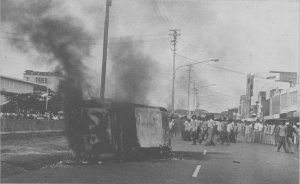
The year is 1974. Sakura season hasn’t come yet. Only the cold breeze from the north covers Japan with snow. At that time, Japan’s PM, Tanaka Kakuei, flew to a warmer place, Indonesia. There, Suharto and his cabinet welcomed the entourage.  This visit commemorates a strong diplomatic tie between the two countries. Yet, outside the airport terminal, a massive demonstration breaks. The next day, the situation worsened. Protesters highlight the massive Japanese modal inflow to Indonesia. Japanese investors are accused of dominating the Indonesian industry. Hurting the traditional and domestic industry. Parallels with their demands to the Indonesian government regarding the economy and the rule of law. What started as a peaceful demonstration later turned into a riot. Looting and vandalism, especially towards Chinese-owned stores and Japanese products, turned Jakarta into chaos. This event was later known as the MALARI incident.

The MALARI incident wasn’t the first anti-Japanese sentiment in ASEAN countries. For instance, in November 1972, the National Student Centre of Thailand (NSCT) orchestrated a public campaign to boycott Japanese products in Thailand. Japanese products were being targeted due to public opinion towards Japan’s unfair economic relations, where Japan held a significant trade surplus with Thailand. But that’s not the whole picture. Throughout the 70s, Thai scholars raised criticism towards Japan’s economic expansion. Fearing Japan’s new form of imperialism, an economic one. And this anxiety comes from memories of the past.

Towards the Pacific War, Japan had a strong militaristic presence in the region. This held a significant role in order to fulfil Japan’s objective at that time. That is, pursuing dominance in Asia-Pacific. However, after their defeat, Japan changed its course towards economic expansion. This shift is in line with Japan’s new priority, post-war development. However, Japan’s national interest in creating economic dominance reminds the ASEAN people of the grim memories from Japan’s military operation in Southeast Asia. What was once a militaristic imperialism, now turned into economic imperialism. According to Thipakorn (2014), what happened in 1972 Thailand, the Thai people’s resentment towards Japan’s investment is linked to the notion of Japan’s economic imperialism.


Why Domestic Matters?

Japan’s aggressive economic expansion isn’t the sole reason behind public backlash. In reality, the anti-Japanese movement was also driven by domestic dissatisfaction. What happened in the MALARI incident isn’t just plain hatred towards Japanese goods and their capital flows. Rather, there is a complex political and economic discontent that has been built up prior to Tanaka’s visit in 1974. As reflected in the protestors’ demands. That is, to lower prices, fight corruption, and urge the disbanding of the President’s personal assistant (ASPRI). Similarly, Japanese product boycotts in Thailand also shared the same root with public dissatisfaction regarding domestic issues. With the rise of new social groups, especially the educated, discourse regarding how Thailand’s dictator’s military government undermined natural resources and human capital has grown in public.

Regarding domestic issues. Both cases share some similar problems. The first one is about democratization. Indonesia is still trying to restore its stability after the 1965 coup attempt. In the north, Thailand is also led by a military government. The political condition of both countries is in a vulnerable state. Second, the two governments faced constant pressure from the public, demanding the eradication of corruption. Business and government elites are accused of working behind the people to benefit their groups. This also correlates to the third problem, unjust economic development. The economy of both countries, quantitatively, increased. Yet, the distribution of wealth is relatively poor.

The Japanese failed to understand this situation. They even show their strong dominance in investment and trade. Putting intense pressure on domestic operators. In Indonesia, aligned with the newly passed 1967 foreign investment bill, the capital from Japanese investors flows to many sectors. Ranging from manufacturing (e.g., CENTEX in textiles and Toyota Astra in motor car assembly) to fisheries (Lindblad et al., 2002). Similarly, in Thailand, Japanese businessmen also invest heavily in the automotive and food industry (Thipakorn, 2014).


Fukuda And His Heart-to-Heart Strategy

After Tanaka, Takeo Miki assumed the PM office. During his premiership, he stated that Japan needed to intensify its relations with ASEAN (Shibusawa, 1984 in Edstrom, 2025). However, the Japan-ASEAN relationship still stands in an awkward position. The Association refused to invite PM Miki to the first ASEAN summit in 1976. What happened in ASEAN can not be overlooked by the Japanese. ASEAN geopolitical (with the rise of communism in Indo-china) and economic (source of Japan’s natural resources) position is in jeopardy. Maintaining stability and good relations with the region is critical for Japan’s national interest. After a series of anti-Japanese sentiment in ASEAN, Tokyo soon understood their unfavorable situation – that the region viewed them as capitalistic exploiters that were only interested in profits (Haddad, 1980).

A major reorientation then happened in the next premiership. During his 1977 tour in the Philippines, Japanese PM Takeo Fukuda gave a compelling “heart-to-heart” speech. He introduced the three pillars of Japan’s policy in Southeast Asia. The first one is about Japan’s commitment to peace and will not become a military threat. Second, Japan will consolidate its relations with Southeast Asia countries with mutual confidence and trust through heart-to-heart understanding. Third, the emphasis on equality between Japan and the ASEAN partnership. This tenet would later be labeled as the “Fukuda Doctrine”. These principles ought to rebrand Japan’s political-economy relations with ASEAN. Fukuda presented “heart to heart” cooperation in order to reverse his predecessor’s “resource diplomacy”. The success of the Fukuda Doctrine is reflected in the positive response by ASEAN countries. Until today, Japanese policy makers still regard the Fukuda Doctrine as a blueprint for the Japan-ASEAN partnership.


In Today’s Context

ISEAS – Yusof Ishak Institute The State of SEA 2024 report shows that Japan is placed as the most trusted partner among Southeast Asians. Despite the positive view, the number of investments and trade from Japan is fluctuating in a negative trend. China’s economic ascension could explain the prior. The Fukuda doctrine may have solved Japan’s poor relations with ASEAN in the past. But the dynamics of the present political economy of the region may lead policymakers in Tokyo to recalibrate their paradigm once again to stay relevant. With or without the Fukuda doctrine.


Reference

Edström, B. (2025). Japan’s evolving foreign policy doctrine: The long postwar. Springer Nature.

Haddad, W. W. (1980). Japan, the Fukuda doctrine, and ASEAN. Contemporary Southeast Asia, 2(1), 10-29. doi:10.1355/cs2-1b

Lindblad, J. T. & Thee Kian Wee. (2002). Indonesian Economic Development and Japanese Technology (Working Paper Vol. 2002-09).  The International Centre for the Study of East Asian Development.  https://www.agi.or.jp/media/publications/workingpaper/WP2002-09.pdf

Seah, S. et al. (2024). The State of Southeast Asia: 2024 Survey Report. ISEAS-Yusof Ishak Institute. https://www.iseas.edu.sg/centres/asean-studies-centre/state-of-southeast-asia-survey/the-state-of-southeast-asia-2024-survey-report/

Thipakorn, S. (2014). The anti-Japanese movement in Thailand in the 1970s in international and domestic perspective. Asian Review, 27(1), 17-26. doi:10.58837/chula.arv.27.1.2


Short Biography:

A. F. Abbas graduated from the Department of International Relations at Hasanuddin University. During his study, he initiated the Japan Culture Club. A club for Hasanuddin’s IR students who are interested in Japan’s socio-culture.

Forgotten: ASEAN’s Vision on Disaster Management

It was merely three months ago when Indonesians headed to the polls to elect their municipal leaders in the 2024 local elections. As many as 207 million eligible voters were expected to vote in 37 provinces, 415 regencies and 93 cities (Yuniarto, 2024). Yet, millions of voters were barred from exercising their democratic right due to an unanticipated disaster. In the province of North Sumatra, hundreds of polling stations in certain areas were flooded and, consequently, unable to operate. As a result, the Indonesian Election Commission had to schedule revotes in 110 polling stations across North Sumatra (Nefi, 2024). In September 2024, the Indonesian Agency for Meteorological, Climatological and Geophysics (BMKG) issued a warning that earthquakes from two megathrust zones, namely the Sunda Strait Megathrust and the Mentawai-Siberut Megathrust are imminent (Dewi, 2024). The Head of the Agency, Daryono, stated that these two zones have not experienced earthquakes for more than two centuries and the buildup of stress between the plates will inevitably lead to a great earthquake. These two situations provoke an alarming question to Southeast Asian countries – in this case, governments: what is the plan?

History of ASEAN Disaster Management Strategy

Although the disasters have ended or have yet to come, the issue remains alive and kicking. Southeast Asia is known to be one of the most disaster-prone regions in the world, with 40% of its population having experienced a natural hazard in the past five years (Vigers, 2024). Last year, on December 26, 2024, marked the 20th anniversary of the 2004 Indian Ocean Tsunami, which devastated thousands of communities in Indonesia and Thailand. Ever since this tragedy, Southeast Asian nations have made significant progress to improve disaster management systems, such as establishing responsive governance, allocating disaster risk and contingency funds, and strengthening regional collaboration (Agbisit, 2024). The third point is particularly critical as the transboundary nature of disasters requires an enduring collaboration between states. ASEAN, as the only regional organization in Southeast Asia, is key to achieving a staunch and effective disaster management strategy.

There is no denying that ASEAN has achieved substantial advancements in terms of disaster management. After the 2004 tsunami, member states signed the ASEAN Agreement on Disaster Management and Emergency Response (AADMER) and installed the ASEAN Coordinating Centre for Humanitarian Assistance on Disaster Management (AHA Centre). These measures laid the foundation for the organization’s disaster management coordination and schemes (Djalante & Ponto, 2024). They have also prompted the community to kickstart other programs to better prepare for future natural hazards, such as establishing the ASEAN Emergency Response and Assessment Team (ASEAN-ERAT) and Disaster Emergency Logistics System for ASEAN (DELSA). All of these measures are executed with the purpose of achieving the ASEAN Vision 2025 on Disaster Management.

The Successes and Drawbacks

ASEAN has been applauded by the international community for its accomplishments in learning the lessons of 2004. For instance, the 2023 World Risk Poll reported that 67% of Southeast Asian adults believe they could protect themselves and their families from a future disaster. Furthermore, Caballero-Anthony et. al. (2023) argued that ASEAN has proven to be instrumental in supporting member states’ disaster relief and humanitarian operations, especially during the 2008 Nargis Cyclone and the 2018 Central Sulawesi earthquakes. ASEAN’s preparedness in disaster management has arguably surpassed that of North America. In fact, it is logical to believe that these triumphs may have propelled ASEAN onto the pinnacle of world leadership in disaster diplomacy.

While ASEAN may currently be hit by a “tsunami” of appraisals, one must not overlook the drawbacks that follow. Recently, it has become more obvious that ASEAN is regressing in its efforts to achieve disaster management targets. Firstly, according to the Asia-Pacific Disaster Report 2022, ASEAN is falling short across nearly all indicators in terms of reaching the Sendai Framework for Disaster Risk Reduction targets. Secondly, although ASEAN has adopted numerous frameworks to tackle the underlying issues, national governments seem to lack the leadership to implement them, even occasionally diverge from them (Caballero-Anthony, et. al., 2023). This challenge is further exacerbated by ASEAN’s non-intervention principle, which hinders any criticisms towards the actions of its member states (Arumbinang, 2022). Thirdly, despite efforts to develop a quick-response system for disasters, ASEAN still lacks the sense of urgency to react to such life-threatening situations. Khotimah & Putra (2019) highlight the worrying implications of ASEAN’s treatment towards post-natural disaster situations as an opportunity to improve quality of life rather than a threat to security and peace. These circumstances put ASEAN’s approaches and institutional structures into question. The author stresses that those liabilities must be of concern to ASEAN policymakers as failure to mitigate them could possibly destroy ASEAN’s global reputation in disaster management.

A Forgotten Issue and What Should Be Done About It?

As the deadline for accomplishing the targets of ASEAN Vision 2025 is approaching, one must observe the subsequent steps that should be taken. On October 11, 2024, Malaysia, as the 2025 ASEAN Chairman, unveiled the theme of ASEAN Chairmanship 2025, “Inclusivity and Sustainability” (MFA Malaysia, 2024). At first glance, one might think the discussion on further actions to complement the 2023 ASEAN Leaders’ Declaration on Sustainable Resilience – a declaration on disaster management and environment – will be included. However, topics on disaster management have been discovered to be unprioritized and overshadowed by other crises, such as the South China Sea dispute and the Myanmar Civil War. In addition, a Second Donald Trump Presidency has caused several concerns about future trade relations and the prospect of another US-China trade war.

ASEAN would have to brace itself for a challenging ride this year. As much as it is critical to resolve unsettled issues, it is also vital not to disregard the responsibility to maintain initial successes, specifically in disaster diplomacy. The author believes that there are two ways to address this matter. Firstly, Malaysia has to set a precedent for succeeding ASEAN chairmen to prioritize disaster management as an annual priority to boost development on this issue. Secondly, instead of continuing the path of consensus-driven diplomacy, ASEAN must show clarity and utilize a more assertive approach in terms of realigning member states’ disaster management policies with ASEAN’s framework in order to cement unity on this issue.

The never-ending threats of disaster have continually put Southeast Asian people in danger. The recent floods in Indonesia and the megathrust earthquake warning should be a wake-up call for ASEAN not to view human lives lightly. That is why reinvigorating ASEAN’s disaster management blueprint is fundamental to solidifying ASEAN as not just a sidekick but a leader in disaster diplomacy.


References

Agbisit, J. B. (2024, October 8). 2004 Indian Ocean Tsunami: A Turning Point in Disaster Resilience. The ASEAN Magazine. https://theaseanmagazine.asean.org/article/2004-indian-ocean-tsunami-a-turning-point-in-disaster-resilience/

AKCF. (n.d.). ASEAN Coordinating Centre for Humanitarian Assistance on Disaster Management (AHA Centre). ASEAN Korea Cooperation Fund. https://www.aseanrokfund.com/our-partners/asean-coordinating-centre-for-humanitarian-assistance-on-disaster-management-aha-centre

Arumbinang, M. H. (2022). Problems and Dilemmas: ASEAN Commitments in Disaster Management. Indonesian Comparative Law Review, 4(1), 17–25. https://doi.org/10.18196/iclr.v4i1.13219

Caballero-Anthony, M., Cook, A. D. B., & Lassa, J. (2023, March 2). Disaster Management in Southeast Asia: 20 Years of Progress and Challenges. S. Rajaratnam School of International Studies. https://www.rsis.edu.sg/rsis-publication/nts/disaster-management-in-southeast-asia-20-years-of-progress-and-challenges/?doing_wp_cron=1677830612.6909389495849609375000#.ZAG5_HZBzIW

Dewi, I. R. (2024, December 30). BMKG Sebut Gempa Megathrust RI Hanya Tunggu Waktu, Ini Zona Merahnya. CNBC Indonesia. https://www.cnbcindonesia.com/tech/20241230110310-37-599471/bmkg-sebut-gempa-megathrust-ri-hanya-tunggu-waktu-ini-zona-merahnya

Djalante, R. & Ponto, J. (2024, October 8). ASEAN’s Strengthened Disaster Preparedness and Response Framework. The ASEAN Magazine. https://theaseanmagazine.asean.org/article/aseans-strengthened-disaster-preparedness-and-response-framework/

Ing, L. Y. & Vadilla, Y. (2024). How A Second Trump Presidency Will Impact ASEAN Economy. Jakarta Globe. https://jakartaglobe.id/opinion/how-a-second-trump-presidency-will-impact-asean-economy

Khotimah, N. H. & Putra, K. I. (2019, October 10). A Resilient ASEAN?: ASEAN and Resilience in Natural Disaster. ASEAN Studies Center Universitas Gadjah Mada. https://asc.fisipol.ugm.ac.id/2019/10/10/a-resilient-asean-asean-and-resilience-in-natural-disaster/

MFA Malaysia. (2024). LAUNCHING CEREMONY OF THE LOGO AND THEME OF ASEAN-MALAYSIA CHAIRMANSHIP 2025. Ministry of Foreign Affairs Malaysia. https://www.kln.gov.my/web/guest/-/launching-ceremony-of-the-logo-and-theme-of-asean-malaysia-chairmanship-2025-22-october-2024

‌Natalia, T. (2024, September 21). Gempa Megathrust Tinggal Tunggu Waktu, Ini 13 Wilayah Paling Rawan! CNBC Indonesia. https://www.cnbcindonesia.com/research/20240921144456-128-573543/gempa-megathrust-tinggal-tunggu-waktu-ini-13-wilayah-paling-rawan

Nefi, A. (2024, November 28). Banjir Saat Pilkada, 110 TPS di Sumut akan Gelar Pemungutan Suara Susulan. Tempo. https://www.tempo.co/politik/banjir-saat-pilkada-110-tps-di-sumut-akan-gelar-pemungutan-suara-susulan-1174211

Ramzi, M. H. (2024, October 25). Why 2025 Is a Make or Break Year for ASEAN Unity. The Diplomat. https://thediplomat.com/2024/10/why-2025-is-a-make-or-break-year-for-asean-unity/

Tan, A. & Louis, Y. M. (2024, October 16). Malaysia’s ASEAN chairmanship is a catalyst, not a panacea. Lowy Institute. https://www.lowyinstitute.org/the-interpreter/malaysia-s-asean-chairmanship-catalyst-not-panacea

Vigers, B. (2024, August 15). Southeast Asia Feels Prepared for Disasters. Gallup. https://news.gallup.com/poll/648242/southeast-asia-feels-prepared-disasters.aspx

‌Yuniarto, T. (2024, August 29). Pilkada Serentak 2024: Jumlah Pemilih Potensial, Anggaran, dan Tahapan. Kompaspedia. https://kompaspedia.kompas.id/baca/paparan-topik/pilkada-serentak-2024-alur-data-dan-tren-sosial-politik


Short Biography:

Daniel Emmanuel Situmeang is an undergraduate student at the Department of International Relations at Universitas Gadjah Mada. He can be reached through e-mail at danielemmanuelsitumeang@mail.ugm.ac.id.

The Getaway Car Presidency: Prabowo, Power, and the Road to Nowhere

Drivin’ the getaway car

We were flyin’, but we’d never get far

Taylor Swift’s Getaway Car is a song about high-speed betrayals, thrilling escapes, and the eventual realization that running from one mess often leads to another. It’s a song of choices that feels exhilarating at first—until you realize the road leads to nowhere. If there’s a song that best describes the socio-political condition of Indonesia under Prabowo Subianto’s presidency, this might be it.

Since taking office, Prabowo’s government has moved swiftly, reshaping policies, consolidating power, and making bold budgetary decisions. A unique paradox marks his leadership: while Indonesia witnesses growing civil society protests against military influence in governance, education budget cuts, and creeping authoritarianism, there remains a silent majority that supports his administration. Much like the song’s protagonist, who realizes too late that they were part of a doomed ride, Indonesia finds itself on a high-speed political journey with no clear exit strategy.

This paradox stems from diverging perceptions of stability and progress. On one hand, student groups, academics, and activists are raising alarms over increasing state control and the erosion of democratic freedoms. The return of military figures to civilian positions is seen as a step backward, echoing the days before Reformasi, when the military wielded extensive political and economic power. Education cuts have fueled anger among the youth, who see them as a sign of misplaced priorities. Meanwhile, concerns over media restrictions and the suppression of dissent paint a picture of creeping authoritarianism.

On the other hand, Prabowo’s supporters—primarily from rural communities, the working class, and nationalist circles—view his leadership as a necessary counterbalance to instability. To them, military governance represents discipline, order, and strength. Programs like free school meals, ambitious infrastructure projects, and nationalist rhetoric reinforce the image of a strong and protective leader. The silent majority, therefore, remains largely content, believing that protests are exaggerated or instigated by elites who fail to understand the realities of common citizens.

However, as history has shown, such dynamics rarely remain static. Public patience can wane as economic pressures mount, and once-loyal supporters can become disillusioned when promises fail to materialize. The question remains: Will this silent majority continue to ride along, or will they eventually recognize that they, too, are passengers in a political getaway car heading toward an uncertain destination?


The illusion of a promising start

It was the best of times, the worst of crimes

I struck a match and blew your mind

But I didn’t mean it, and you didn’t see it

In the song, Swift describes a relationship that begins with a thrilling, rebellious escape—only for things to spiral out of control. Prabowo’s presidency mirrors this, starting with high public enthusiasm. He promised stability, security, and economic transformation, particularly in defense and infrastructure.

His high hopes, particularly with his promises of economic transformation, national security, and military professionalism, offer a promising future for Indonesia. But with these promises came drastic moves. His administration has aggressively expanded the role of the military in civilian governance, reminiscent of Indonesia’s Suharto-era “dual function” (Dwifungsi) doctrine. The passing of a law allowing active military officers to take civilian posts marks a fundamental shift away from the democratic reforms of Reformasi, Indonesia’s post-1998 transition to democracy. Critics argue that this undermines civilian oversight and could open the door to unchecked military influence. Much like the song’s theme—where the excitement of an escape fades into inevitable disillusionment—the government’s bold moves (e.g., militarization of civilian roles, budget reallocations) may initially seem strategic but risk long-term consequences.


When the civil society hits the brakes…

We were jet-set, Bonnie and Clyde

Until I switched to the other side, to the other side

It’s no surprise I turned you in

‘Cause us traitors never win

Indonesia’s streets have not been quiet. Large-scale protests—most notably the “Dark Indonesia” movement led by students and educators—have erupted in response to Prabowo’s sweeping budget reallocations. With education and public works taking a hit to fund other priorities, including military spending and nationalistic programs, young Indonesians have voiced strong opposition, with much of the protest activity shifting to digital platforms such as social media (mostly Instagram and X) and online petitions. This trend reflects both the increasing restrictions on physical demonstrations and the changing nature of activism in a digitally connected era. While digital protests allow for wider participation and international awareness, their effectiveness is debated.

The silent majority, on the other hand, often less engaged in online discourse, may remain indifferent or even skeptical, viewing these protests as disconnected from their immediate concerns. The government’s response? A mix of crackdowns and attempts to discredit activists, reminiscent of past authoritarian tactics. In Papua, activists continue to be arrested for challenging military actions, while press freedom faces subtle yet significant restrictions. Civil society movements have raised concerns that the space for democratic expression is shrinking. The more the government tightens its grip, the more resistance builds.


The “silent majority”

And a circus ain’t a love story, and now we’re both sorry

Yet, despite the vocal opposition, Prabowo still enjoys broad support, particularly from rural communities, working-class citizens, and nationalist groups who see him as a stabilizing force. His appeal is rooted in a blend of strongman leadership, military discipline, and populist economic programs such as free school meals. Additionally, state-controlled media and nationalist rhetoric have played a significant role in shaping public perception, reinforcing his image as a protector of Indonesian sovereignty and progress. Many in this silent majority remain skeptical of digital protests, viewing them as disconnected from their daily struggles and driven by urban elites. Particularly among working-class Indonesians and rural communities. This is the “silent majority” who see his leadership as a promise of stability in an increasingly uncertain world. Much like the song’s protagonist, who is swept up in the thrill of the escape, many of Prabowo’s supporters believe they are on the right path—until reality catches up.

Populist policies like free school meals resonate deeply with this demographic. The government has skillfully framed its actions as necessary for national progress, and state-controlled narratives help reinforce this belief. But as inflation rises, budget cuts affect essential services, and democratic spaces shrink, will the silent majority start feeling like they’ve been taken for a ride?


No way out

I knew it from the first Old Fashioned, we were cursed

We never had a shotgun shot in the dark

Indonesia’s governance under Prabowo faces a potential turning point: Will it continue down a path of securitization and centralized power, or will opposition forces grow strong enough to change course? The song’s theme of inevitable downfall mirrors the uncertainty of how sustainable Prabowo’s approach will be in the long run. History suggests that unchecked control, especially when met with rising discontent, rarely ends smoothly. While the administration appears to be in control, the pushback from civil society and increasing economic pressures may eventually force a reckoning. Just like the song’s characters, who think they are free but are actually heading toward their downfall, the government’s trajectory might lead to a moment where the realities of governance catch up, forcing either reform or crisis.

Just as Getaway Car ends with betrayal and abandonment, the long-term trajectory of Prabowo’s governance remains uncertain. Will Indonesia continue down this road, or will the silent majority eventually slam the brakes?

One thing is certain: The ride is far from over. And in politics, as in Swift’s lyrics, high-speed escapes often lead straight into another trap.


Short Biography:

Tunggul Wicaksono is a Research Manager at ASEAN Studies Center, Universitas Gadjah Mada. He can be reached through e-mail at tunggulwicaksono@ugm.ac.id.

ASEAN Studies Center – Japan Foundation Essay Competition

Background

The Indo-Pacific region faces a complex and evolving landscape of strategic, economic, and security challenges. While Japan and ASEAN have maintained a longstanding partnership characterized by cooperation in areas such as trade, infrastructure development, security, and cultural exchange, the current geopolitical climate necessitates a renewed focus on collaborative efforts. This need is amplified by emerging regional dynamics, including geopolitical tensions and economic shifts, requiring innovative and adaptable policies to ensure stability and prosperity. These evolving dynamics demand fresh perspectives on how Japan and ASEAN can jointly navigate these challenges and maintain a stable and prosperous Indo-Pacific.

The existing partnership between Japan and ASEAN provides a strong foundation for enhanced collaboration. However, the dynamic nature of the Indo-Pacific necessitates a modernization of these cooperative efforts. The region requires innovative and adaptable policies to address its multifaceted challenges, ranging from traditional security concerns to non-traditional threats like climate change and pandemics. Furthermore, fostering deeper understanding and dialogue among future leaders is crucial for ensuring the long-term success of Japan-ASEAN cooperation in the Indo-Pacific. The need for creative policy recommendations and strategic insights that can influence diplomatic and economic strategies in the region is more critical than ever.

This essay competition directly addresses these needs by providing a platform for students, young professionals, and scholars to engage in high-level discussions on international relations and geopolitics within the Indo-Pacific context. By encouraging participants to offer actionable solutions and fresh perspectives, the project fosters a forward-looking approach to addressing regional issues. This initiative serves as a catalyst for promoting collaborative dialogue between Japan and ASEAN, encouraging participants to analyze the importance of this partnership in achieving shared goals like peace, stability, and prosperity in the Indo-Pacific region. This competition aims to empower the next generation of leaders by giving them a platform to contribute their thoughts and solutions to real-world challenges.

Key Topics

  1. Strategic Security and Maritime Cooperation: How Japan and ASEAN can cooperate to ensure peace, stability, and security in the Indo-Pacific, particularly concerning maritime disputes, freedom of navigation, and regional defense cooperation.
  2. Economic Partnership and Development: Exploring ways Japan and ASEAN can strengthen economic ties through trade, investment, and infrastructure projects, especially under the framework of Japan’s Free and Open Indo-Pacific Strategy (FOIP).
  3. Environmental and Sustainable Development: Investigating joint initiatives to address environmental challenges such as climate change, disaster preparedness, and resource management in the Indo-Pacific region.
  4. Cultural Exchange and People-to-People Connectivity: Assessing how collaboration in education, tourism, and cultural diplomacy can foster stronger ties between ASEAN countries and Japan.

General Terms and Conditions

  1. The participant is an active university student from Japan, and all ASEAN member states. A student identification card or other supporting document is needed to prove active status. 
  2. Participants can be an individual or a group consisting of a maximum of 3 persons. 
  3. Participants are encouraged and expected to read the entirety of the guidelines provided in the ASC website.

List of Research and Development Funds:

  1. Impact Grant (1st Place): IDR 3,000,000
  2. Innovation Grant (2nd Place): IDR 2,000,000
  3. Seed Grant (3rd Place): IDR 1,000,000

The awarded Research and Development Funds, in the form of grants, can be used to support the author/team’s continued research, development, and implementation of their innovative solution.

Essay Guidelines

  1. The essay must be original work and has not been published in other publication platforms.
  2. The essay must align with the key topics listed above.
  3. The essay must be written in American English.
  4. Font: Cambria, font size: 12, line spacing: 1.15, spacing before: 0 pt, spacing after: 12 pt.
  5. Full essay length: 1,500 – 2,000 words. Excluding footnotes and references.
  6. The author notes that the essay can not be withdrawn at any condition once it is accepted by the committee.
  7. Essays must follow a formal academic format, including an introduction, main body, and conclusion, with proper citations and references for all sources.
  8. The essay will be curated and published by the ASEAN Studies Center for academic purposes.

Submission and Competition Technicalities 

  1. Submission is to be submitted through ugm.id/ASCECJF25
  • File naming should be Last name_Essay [E.g. Saputra_Essay (individual) or Saputra, Firhansyah & Ashari_Essay (groups).
  • The submitted essay should be in PDF format.
  • The latest submission to be made is by Sunday, the 19th of January 2025. 
  • One representative is sufficient for group submission to submit the essay.
  1. Three of the best essays will be selected to continue to the next stage. This will be announced on the 5th of March 2025.
  2. The top three winners will be announced on the 5th of March 2025.
  3. The winners are asked to present their essays during the seminar and awarding ceremony. 

Submit Your Essay here: ugm.id/ASCECJF25

Timeline

Contact Person

Mr. Tunggul Wicaksono

Research Manager, ASEAN Studies Center Universitas Gadjah Mada

tunggulwicaksono@ugm.ac.id

“Mapping the Critical Role of ACWC, CSOs, and Academia” and “ASEAN Post-2025 Vision Consultation”

A seminar titled “Mapping the Critical Role of ACWC, CSOs, and Academia” was held on November 1, 2024, at The Manohara Hotel Yogyakarta, Indonesia. This landmark event provided a significant platform for dialogue on collaborative strategies to advance the protection of women and children in Southeast Asia. Organized with the generous support of the Netherlands Embassy, the seminar brought together a wide-ranging audience that included policymakers, academics, civil society representatives, and inspiring young changemakers.

The event opened with a series of keynote speeches that established the thematic focus for the day. Karen Hordijk, Senior Policy Advisor for ASEAN from the Netherlands Embassy in Jakarta, set an inspiring tone with a thought-provoking address. She emphasized the pivotal role of youth in shaping inclusive and resilient policies. Her speech underscored the importance of leveraging intergenerational perspectives to address complex societal challenges. This was followed by a recorded message from Dr. Wawan Mas’udi, M.P.A., the Dean of the Faculty of Social and Political Sciences at Universitas Gadjah Mada (UGM). Dr. Wawan stressed the importance of adaptive policy frameworks, particularly in crisis situations, which require innovative approaches and collaborative partnerships.

The seminar featured a diverse lineup of esteemed speakers, each offering invaluable perspectives on critical issues related to the welfare and rights of women and children. H.E. Soukphaphone Phanit, the Chair of the ASEAN Commission on the Promotion and Protection of the Rights of Women and Children (ACWC), delivered a compelling presentation on women’s leadership in navigating crises. Her insights highlighted the necessity of empowering women to take active roles in decision-making processes, especially during periods of social and political instability.

Following this, Dr. Okky Puspa Madasari, the Founder of OMGGroup, illuminated the power of storytelling in advocacy efforts. She demonstrated how personal narratives can drive societal change and inspire collective action. H.E. Yanti Kusmawardhani, Indonesia’s Representative for ACWC, presented practical measures to enhance the safeguarding of children, particularly in vulnerable situations. Her session emphasized the urgent need for comprehensive policies and robust enforcement mechanisms.

Adding to these rich discussions, Ni Luh Putu Maitra Agastya, Director of PUSKAPA (Center on Child Protection and Wellbeing), shared innovative strategies for improving child welfare through institutional capacity-building and community engagement. Meanwhile, Agustina Kustulasari, S.Pd., M.A., a Lecturer and Researcher, highlighted the indispensable role of academia in advancing rights protection. She pointed to the need for interdisciplinary research and evidence-based policy recommendations to inform decision-making processes.

The sessions were expertly moderated by Yulida Nuraini Santoso, Managing Director of the ASEAN Study Center (ASC) at UGM, who ensured an engaging flow of discussions. The day concluded with a lively Q&A segment, where participants had the opportunity to pose questions to the panelists, exchange ideas, and delve deeper into the topics presented. This interactive session enriched the dialogue and fostered a shared commitment to action.

The final session of the day, titled “ASEAN Post-2025 Vision Consultation,” served as a forward-looking platform to shape the region’s strategic priorities for the future. The consultation was facilitated by notable experts, including H.E. Yanti Kusmawardhani, Indiah Wahyu Andari (Director of Rifka Annisa), Dr. Arifah Rahmawati (member of ASEAN Women for Peace Registry), and Dio Herdiawan Tobing (from the World Benchmarking Alliance). Together, they guided participants in exploring ways to integrate diverse stakeholder voices into policymaking processes. Discussions emphasized the importance of inclusivity, sustainability, and innovation in addressing the region’s evolving challenges.

Overall, the seminar succeeded in fostering meaningful dialogue, encouraging cross-sector collaboration, and inspiring actionable solutions. It reaffirmed the importance of collective effort in advancing the rights and well-being of women and children while laying the groundwork for a stronger, more inclusive ASEAN.

Policy Brief Competition

Top 3 Policy Briefs

  1. First Place – “Collaborating Youth Power for Child and Women Protection from Online Gambling Risks in ASEAN Countries”, by Muh. Rifki Ramadhan, Bagas Febi Cahyono, and Muhammad Rifki Nur Aprialdi.
  2. Second Place – “Towards a Resilient Marawi: Policy Recommendations for Inclusive Recovery and Sustainable Development Post the 2017 Marawi Crisis”, by Christopher Paller Gerale.
  3. Third Place – “Empowering ASEAN Youth Through Ministri(es) Initiatives Amid Myanmar’s Crisis: A Path to Humanitarian and Policy Engagement”, by Muwalliha Syahdani, Herbagus Unggul, and Thant Thura Zan.


Top 10 Selected Policy Briefs

The wait is over; congratulations to the top 10 selected policy briefs. Meanwhile, the top three winners will be announced in due course. And to all participants who have submitted policy briefs and ideas, thank you for your enthusiasm.

Stay tuned on ASC social media for more information. #BringingASEANCloserToYou


Background

Despite progress made in recent years, women and children continue to face various forms of discrimination, violence, and inequalities across ASEAN member states. The current state of the world has become less safe and increasingly dangerous. Developments in Ukraine, the Palestinians, and within ASEAN member states itself, such as in Myanmar, tell us that the prolonged conflicts, wars, and violence have directly affected women and children as the most fragile members of the community. Promoting safe and empowered women and children is multifaceted and presses on the world’s growing concern, not excluding ASEAN. At its core, the issue stems from systemic gender disparities and vulnerabilities that persist in ASEAN countries, including limited access to education, healthcare, economic opportunities, and legal protections. Women and children often bear the brunt of poverty, lack of resources, and cultural norms that perpetuate gender-based violence and discrimination. Hence, when conflict and natural disasters are added into the equation, it poses greater challenges to their safety and well-being, including child trafficking and displacement of women and children from their families.

In shaping the future of ASEAN beyond 2025, the ACWC has a crucial role to be at the forefront in driving closer regional cooperation among relevant ASEAN Sectoral Bodies in promoting and protecting the rights of women and children, especially the disadvantaged, those living in vulnerable situations as well as, using rights and gender perspectives. Some notable developments have been made. The ACWC will institutionalize gender mainstreaming efforts across the ASEAN Community pillars through the ASEAN Gender Mainstreaming Steering Committee (AGMSC), together with the ASEAN Committee on Women (ACW). They reaffirmed their commitment to utilize a whole-of-ASEAN approach in implementing the ASEAN Gender Mainstreaming Strategic Framework (AGMSF). They further supported Indonesia on the roll-out of the ASEAN Do-No-Harm Guide for Frontline Responders: Safeguarding the Rights of Victims of Trafficking in Persons – launched on 11 January 2023 with support from the ASEAN-ACT.

The ACWC has also committed to continue to implement the ASEAN Regional Plan of Action on Women, Peace and Security (ASEAN RPA on WPS) with stronger advocacy and capacity-building efforts, especially in the security sector as well as ASEAN Regional Plan of Action on Ending Violence against Women (ASEAN RPA on EVAW). However, there remains a looming gap between the progressive realm of policy-making at a regional level and its implementation at home. CSOs play a crucial role in advocating for the rights of women and children, providing essential services, and holding governments accountable for their commitments. Similarly, academia contributes through research, analysis, and evidence-based recommendations to inform policy development and program interventions. However, a tri-party collaboration remains seldom despite it being much needed. This seminar is held to map the many ways that ACWC, CSOs, and academia can become the strong arm for the promotion and protection of women and children in ASEAN as well as internationally.

Guiding Questions

  1. What are the effective strategies for raising community awareness regarding the importance of safeguarding the rights and well-being of women and children?
  2. What steps can be taken by the youths to empower and promote the protection of women and children in ASEAN in times of crisis?

General Terms and Conditions

  1. The participant is an active university student. A student identification card or other supporting document is needed to prove active status. 
  2. Participants can be an individual or a group consisting of a maximum of 3 persons. 
  3.  Participants are encouraged and expected to read the entirety of the guidelines provided in ASC website.

List of Prizes:

  1. Grand Prize (1st Place) IDR 3,000,000
  2. Excellence Prize (2nd Place) IDR 2,000,000
  3. Merit Prize (3rd Place) IDR 1,000,000
  4. E-Certificate for Top 10 Selected

Policy Brief Guidelines

  1. The policy brief must be original work and has not been published in the other publication platforms.
  2. The policy brief must capture the role of youth in promoting and protecting the rights of women and children in ASEAN issues. You may use the theory, framework, and approach that you have learned.
  3. Use American English for your writing.
  4. Font: Times New Roman, font size: 12, line spacing: 1.25, spacing before: 0 pt, spacing after: 12 pt.
  5. Full policy brief length: 1,200 – 1,500 words. Excluding footnotes and references.
  6. The author notes that the policy brief can not be withdrawn at any condition once it is accepted by the committee.
  7. The policy brief must follow these structures to ensure clarity and effectiveness in communicating key points:
  • Title
    A clear and concise title that reflects the topic of the brief. Write your name below the title.
  • Executive Summary
    A brief overview of the policy issue, the key findings, and the main recommendations. It should provide a snapshot of the entire brief.
  • Introduction
    Explain its significance and relevance. Provide the necessary background information to help the reader understand the issue better. This section should include relevant statistics, historical context, and policy history.
  • Problem Statement
    Clearly articulate the problem or issue that the policy brief is addressing. This should be specific, concise, and backed up by evidence.
  • Policy Analysis
    This section explains the reasoning behind your policy recommendations. In effect, this section describes the problem that your policy recommendations intend to solve. It should include an analysis of current policies related to the issue, their strengths, weaknesses, and any gaps or areas that require improvement.
  • Policy Recommendation
    Present your proposed solutions or recommendations. These should be clear, specific, and actionable. Explain how these recommendations address the identified problem and why they are the best course of action. It’s essential to provide evidence and examples to support your recommendations.
  • Conclusion
    This final section of the policy brief should detail the actions recommended by your findings. Summarize the key points of the policy brief, emphasizing the importance of the recommendations and their potential impact on the issue.
  • References
    Include a list of all the sources and references used in the brief. Follow a consistent APA citation style.

      8. Incorporate visuals into the policy brief. Choose effective visuals for the type of information you would like to communicate. For example, pie charts and bar graphs are preferable to data tables to illustrate findings. Include captions for photos and other visuals that explain the content to the reader.

      9. The policy brief will be curated and published by the ASEAN Studies Center for academic purposes.


Submission and Competition Technicalities 

Submission is to be submitted through ugm.id/ASCPBC24

  • File naming should be Last name_Policy Brief [E.g. Saputra_Policy Brief (individual) or Saputra, Firhansyah & Ashari_Policy Brief (groups).
  • The submitted policy brief should be in PDF format.
  • The latest submission to be made is by Sunday, the 15th of September. 
  • One representative is sufficient for group submission to submit the final policy brief.

2. Ten of the best policy briefs will be selected to continue to the next stage. This will be announced 8th of October.

3. The top three winners will be announced on the 19th of October 2024

4. The winners are asked to make a 10 minutes video presenting their policy brief. 


Submit Your Policy Brief here: ugm.id/ASCPBC24


Timeline


Contact Person

Mr. Tunggul Wicaksono

Research Manager, ASEAN Studies Center Universitas Gadjah Mada

tunggulwicaksono@ugm.ac.id

Public Lecture on “Navigating Contemporary Challenges: Indonesian Diplomacy in a Chanching Global Changes”

On September 12, 2024, the ASEAN Studies Center of Universitas Gadjah Mada and the Ministry of Foreign Affairs of the Republic of Indonesia held a public lecture entitled “Navigating Contemporary Challenges: Indonesian Diplomacy in a Changing Global Landscape,”  with speaker Vahd Nabyl A. Mulachela, S.IP., MA, Director of the Center for Policy Strategy for the Asia Pacific and Africa Region. In his presentation, Vahd Nabyl discussed various global challenges and trends that affect Indonesia’s diplomacy today, as well as how the country can play a role in navigating the ever-changing dynamics of global geopolitics.

Global Challenges and Diplomacy Priorities

The speaker explained various global megatrends, including the rivalry between the United States and China, the rise of populism, and threats to stability in regions such as the Taiwan Strait and the Korean Peninsula. He also discussed other issues such as human trafficking, illegal fishing, and the role of US military bases in the region. Other global challenges to be faced in 2024 include environmental risks, artificial intelligence (AI), and political polarization in society.

Vahd Nabyl emphasized that Indonesia’s foreign policy priorities (POLUGRI) include strengthening economic diplomacy, protecting Indonesian citizens, and increasing Indonesia’s role in the region and the world through international forums such as the G20 and ASEAN leadership. In addition, the speaker also highlighted the importance of strengthening Indonesia’s diplomatic infrastructure through representative offices abroad.

Roles and Challenges of Indonesian Diplomacy

According to Vahd Nabyl, Indonesian diplomacy functions in four main roles: representing, protecting, negotiating, and promoting national interests. In addition, diplomacy also has a non-formal role, namely as a bearer of a positive image, a mediator of conflict, and a problem solver. The challenges faced by diplomats include assignments in countries in conflict, culture shock, and financial and family problems.

To be able to survive in dynamic diplomatic tasks, Vahd Nabyl emphasized the importance of idealism, broad thinking, a spirit of learning, and a love for the work being carried out. Indonesian diplomacy has also played a role in strengthening economic and political cooperation in the region, such as through the Indonesia-South Korea economic cooperation forum that discussed the creative economy and public diplomacy.

Human Rights Issues and the ASEAN Non-Interference Principle

In a question and answer session, Vahd Nabyl responded to the issue of human rights (HAM) in ASEAN, especially related to Myanmar. He explained that although ASEAN applies the principle of non-interference, member countries have put diplomatic pressure on Myanmar. ASEAN, he said, is trying to maintain a balance between intervention in the domestic affairs of member countries and maintaining togetherness as a community.

Indonesia’s Optimism in the Asia-Pacific

Closing the public lecture, Vahd Nabyl spoke about the prospects for Indonesian diplomacy in the Asia-Pacific region in the next 10 years. He is optimistic that Indonesia can play a role as a facilitator amidst the rivalry of major powers in the region, especially through the ASEAN Road to Indo-Pacific vision, which focuses on the inclusive involvement of regional countries.

This public lecture is a reminder of the importance of adaptive diplomacy amidst the ever-changing global dynamics.

ASEAN Studies Center welcomed a visitation from Prof. Kimikazu Shigemasa from Kwansei Gakuin University, Japan

ASEAN Studies Center welcomed a visitation from Prof. Kimikazu Shigemasa from Kwansei Gakuin University, Japan on 11-12 September 2024. The discussions during the visit revolved around significant topics, including developments in the South China Sea, relations between Japan and Indonesia, ASEAN dynamics, and opportunities for collaboration between the two universities.

On the second day, Professor Shigemasa introduced a group of students accompanying him to participate in interactive sessions within the “Security Cooperation in ASEAN” and “Kerjasama Keamanan di ASEAN” classes. These sessions, lasting three hours, were held in the Faculty Auditorium and structured into three segments. Professor Shigemasa initiated the program with a presentation on Indo-Pacific developments, emphasizing the situation in the South China Sea. This was followed by a presentation from the Kwansei Gakuin University students, titled “Building Our Heart-to-Heart Society Beyond Generations,” focusing on themes such as fostering a caring global society, empowering youth, and enhancing connectivity.

The student presentation was a preparatory exercise for the “ASEAN Pavilion Osaka 2025 EXPO,” scheduled to take place at the ASEAN Secretariat later that week. After this, the program shifted to a discussion on ASEAN and Myanmar’s multiple crises. Students were divided into five groups, each representing key actors relevant to the Myanmar situation: (1) The Tatmadaw, (2) the 5-Point Consensus (5PC) key members (Indonesia, Malaysia, and Singapore), (3) Mekong member states, particularly Thailand, (4) Ethnic Armed Organizations (EAOs), and (5) the National League for Democracy (NLD).

Following a short break, the discussions resumed with a focus on “Issues in the South China Sea,” exploring perspectives from major Indo-Pacific stakeholders, including (1) claimant states such as the Philippines and Vietnam, (2) China, (3) the United States, and (4) Indonesia. The dialogue delved into Indonesia’s strategic options in regional security: asserting leadership within ASEAN, advancing its claims in the Natuna Islands, or adopting a neutral stance. The discussions were dynamic and insightful, with students engaging enthusiastically in addressing these critical issues.