RELIGION: BOON OR BANE FOR DEMOCRACY?

In December 2022, the Indonesian government passed a law that penalizes sex outside marriage. This is only one of the many changes in the criminal code that observers warn of the increasing conservatism in the country.

Indonesia houses the largest Muslim population in the world and is also a republic whose democratic experiences and milestones have been widely studied by scholars within and beyond the region. This makes Indonesia a compelling case for reflection on the nexus and tensions between religion and democracy. Is religion compatible with democracy? What opportunities and challenges does the “Islamic Renaissance” entail in the country? Democracy on Religion

Liberal democracy espouses secularism, the separation of church and state, and freedom of religion. In an “ideal” democratic system, the state must not endorse nor support any specific religion while guaranteeing the free exercise of religion among citizens. This is essential in a democracy for many reasons. Religious freedom is a crucial civil right that enhances citizens’ individuality and relations with others. It stops one religion from dominating society, hence promoting diversity and co-existence. At the same time, it prevents policies from being framed according to religious beliefs, which may result in discrimination and repression of fundamental human rights.

Religion and its Tensions with Democracy: The Case of Indonesia

This is particularly important for Indonesia. While the country is predominantly Muslim, Indonesia also has many ethnolinguistic groups with different cultures and practices. It is a challenge in itself to build one nation with an immensely heterogeneous society. The diversity in the country resulted in years of ethnic conflict and violence. Even a religious minority, the Ahmadiyya, faces intimidation and oppression in the exercise of their faith. Indonesia’s dilemma points to the longstanding debate in human rights discourse and practice – are human rights universal, or are they relative to culture and local customs? While I am more inclined to support the former, it is important to be aware and carefully consider the context of a country when designing human rights advocacy and interventions.

However imperfect, the democratization process in Indonesia has assisted in facilitating efforts for reconciliation and balancing competing interests in the country. Recently, the President stunned the world when he acknowledged past grave human rights abuses in the country, including an anti-communist purge in the ’60s and the arrest of democracy activists during the Suharto presidency.

Indonesia sits in between secularism and theocracy. The country’s fundamental law espouses Pancasila, which is the foundational political theory of Indonesia. Through its five principles, Indonesian society believes in one God and aspires to create a just and civilized humanity, unity, democracy, and social justice for all. This tells us that, by principle, Indonesia gives importance to pluralism and citizenship. Scholars and practitioners of the law also adopt legal pluralism and believe that different legal systems are complementary rather than contradictory. For example, community practices and customs are considered along with national and local regulations in settling disputes and conflicts at the village level.

However, in recent years, Indonesia has seen the expanding role of Islam in the country’s social and political life. Aside from Islam being a “source of ethical and cultural guidance”, many Islamic organizations have secured formal power, which allows them to easily introduce measures within the state apparatus that cement their own interests. Hardliner Islamic groups have also proliferated, and fundamentalist thought and practices are becoming more and more widespread. Islamic identity politics have also been evident since Widodo coalesced with conservative Islamic factions and appointed Amin, an influential Islamic figure, as his vice president. The new penal code tends to be more religious than secular. This has implications for Indonesia’s supposed secularism and diversity. How can the Indonesian government best represent the interests and aspirations of all?

As Indonesia continues to modernize and extend its economic and political ascendancy in the region, rapid changes in its social relations and dynamics are also expected. This demands a more careful look at the kind of laws and “social controls” that the government enforces. Suppose conservative forces are forwarding laws in the name of protecting tradition and keeping Indonesian values in check. In that case, it should not be at the expense of fundamental civil and political liberties, nor should it be to repress vulnerable groups even further, such as women, LGBT+, and ethnic communities. Admittedly, this is easier said than done. Hence, political representation must reflect the diversity and vibrance of Indonesian society. If only one group dominates political and policy discourse, it ultimately jeopardizes the general will.

When religion becomes the yardstick for crafting rules and policies, it creates biases, whether intended or not. Propositions that are credible and necessary but “contradictory” to a certain religion may be rejected simply because they do not fit the personal convictions of decision-makers. Integrating religion into politics usually leads to oppressive and harmful policymaking. Religion is also a form of heuristics or cognitive shortcut that devalues deliberation and discussion. Instead of scrutinizing issues, people may resort to using their religion as the sole basis for their position on a particular matter. Democracies ought to be deliberative and pluralistic.

Human rights activists and organizations in Indonesia have sounded the alarm on many changes in the criminal code that could stifle individual freedoms and lead to setbacks in the country’s democratic progress. Aside from banning sex outside marriage, the government also reinstated laws that criminalize insulting the President and other state officials and institutions. They also increased the punishment for blasphemy. These laws can be disproportionately used against individuals and groups with legitimate criticisms and concerns about the government. It may also render already marginalized communities even more vulnerable. Religion, Populism, and Repression

This trend is not only unique to Indonesia. Much of the world has seen the rise of “nationalist” movements, often within the pretext of religion and safeguarding culture. India’s Modi has exhibited Hindu nationalist tendencies, which have meant greater intolerance against the Muslim minority in the country. Myanmar’s Tatmadaw has weaponized Buddhism to rally support from the public and account for its atrocities.

The use of religion to justify repressive and oppressive regimes is apparent. Religion is an effective tool to unify a group of people and subject them to a specific set of beliefs and values, which may be highly prejudiced and absurd. Religion acts as a moral compass that defines what is right and what is wrong. Because religion is subjective, it can easily be manipulated to serve political objectives. Populists and autocrats can bastardize religion to create a public enemy, instill an “us vs them” mentality, and sow further polarization.

Failed democracies thrive out of fear, whether it is real or manufactured. Religion can be a potent force to ingrain this fear. This hysteria against change and modernization is easy to whip up when people already have preexisting beliefs. It is not too difficult to segregate people and label them as the “other”. When this distinction is entrenched, it is convenient to normalize discrimination and violence.

It is said that Indonesia is a model for “Moderate Islam” when compared to the Middle East; the “Indonesian way” can complement Western values and democracy. It also has the potential to correct Islamophobia and promote Islam as a religion of peace. On the other hand, if Indonesia cannot find its balance and condone fundamentalist and hardliner Islamic groups to flourish, Indonesia will certainly regress in its hard-won democratic gains.

Religion has inherent contradictions with democracy. Subscribing to a religion and structuring a supposedly diverse society using its tenets is monopolistic and can bring about intolerance. It is paramount for democracies to ensure that civil, political, and socioeconomic rights are not deprived based on religion and other forms of cleavages. The access and exercise of power should be as widely distributed as possible. Public office should not be limited to certain political clans or religious organizations. For instance, at the village level, cultural and socioeconomic elites must share power and administration with vulnerable and historically marginalized groups. There are more reasons and illustrative cases, present and past, to posit that religion is more of a bane than a boon to democracy. At the moment in world history when (dis)information is fast and instant, we must maintain vigilance in dealing with autocratic agendas in the guise of “respecting” values and tradition. It is easier to believe and conform than to reflect and deliberate. But democracy dies when we rely on shortcuts to define what is good for us. Democracy dies, slowly and deliberately, when we allow a few to sabotage our freedoms and liberties to increase their own. Demagogues and despots are usually cunning and do things “in the name of God”.


REFERENCES

Evans, M. S. (2014). Religion and political decision making. Journal for the Scientific Study of Religion, 53(1), 145–163. http://doi:10.1111/jssr.12088

Evans, T. (2012). Separation of Mosque and State in Indonesia. Policy, 27(4), 35–39.

Głodek, A., & Grzywacz, A. (2020). Indonesia – between religion and democracy, Warsaw: Boym Institute. Retrieved from https://instytutboyma.org/en/indonesia-between-religion-and-democracy

Jaffrey, S. (2020). Is Indonesia Becoming a Two-Tier Democracy?, Washington D.C.: Carnegie Endowment for International Peace.

Jamaluddin, M., Chen, H. & Watson, A. (2022). Indonesia bans sex outside marriage as parliament passes sweeping new criminal code, Jakarta: CNN.

Klinken, G. v. (2019). Living in a Sacred Cosmos: Indonesia and the Future of Islam. Journal of the Humanities and Social Sciences of Southeast Asia, 175(1), 81–135. http://doi:10.1111/jssr.12088

McWilliams, E. (2018). Democracy in Indonesia: A Progress Report, Washington D.C.: The Foreign Service Journal.

Nagda, A. (2020). The Diplomat. [Online] Available at: https://thediplomat.com/2020/03/the-islamization-of-indonesias-foreign-policy/

Omelicheva, M. & Ahmed, R. (2018). Religion and politics: examining the impact of faith on political participation. Religion, State, and Society, 46(1), 4–25.

The World Factbook. (2023). Indonesia, s.l.: Central Intelligence Agency.

Wieringa, S. E. (2006). Islamization in Indonesia: Women Activists’ Discourses. Signs: Journal of Women in Culture and Society, 32 (1), 40–27.


Short Biography:

Kay Conales is a student of the Asia Pacific-Master of Arts in Human Rights and Democratization of the Institute of Human Rights and Peace Studies (IHRP) of Mahidol University (Thailand). She also studied in the Faculty of Social and Political Sciences (FISIPOL) of APMA’s partner-university Universitas Gadjah Mada (Indonesia). She can be reached through e-mail at ksconales@gmail.com.

Redefining Commodities in International Trade: ASEAN Blue Carbon Initiative and Its Role in Navigating Climate Crisis in the Southeast Asia Region

Stepping further into the technological and industrial advancement age, the narration of sustainability in the international trade system has gained much attention from policymakers worldwide. Not only due to the climate crisis’s indiscriminate effect, which transverses beyond borders but also the highly disruptive implications for the international community’s economic activity, this agenda is being prioritized by governments. To make a long story short, states are looking for an answer to strike a balance in economic production, which is pivotal to our daily lives, and the climate crisis is irreversible damage. A recent initiative that has been put forward to solve these pressing issues is the carbon trading system, which places a cap and tax on corporations’ greenhouse emissions. In the context of the Association of Southeast Asian Nations (ASEAN), the Blue Carbon ecosystem, which consists of mangroves, tidal marshes, and seagrass meadows, holds massive potential to be the global hub for carbon sequestration and storage. This article aims to explore ASEAN’s potential to fulfill its leading role in the blue carbon economy agenda and how it may contribute to our collective struggle to halt the climate crisis.
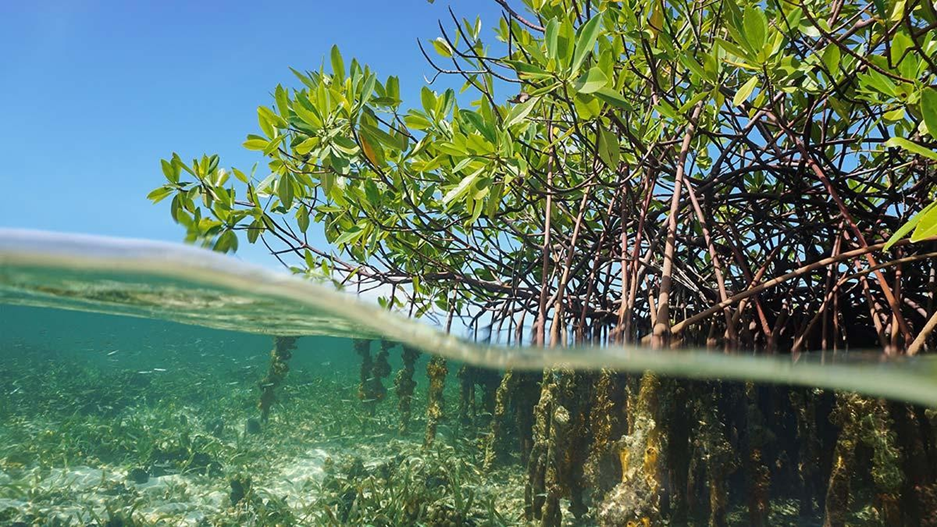
Blue carbon can be understood as carbon dioxide absorbed from the atmosphere and stored in coastal and marine ecosystems. Scott & Lindsay (2022) stated in their writings that the ecosystem’s critical components are crucial in offsetting carbon

footprint excess as the water-logged soils can isolate and store more carbon per unit than a regular forest. Statistically, in an empirical study conducted by Gruber et al. (2019), 31% of our carbon emissions are effectively absorbed into the depths of our ocean each day. Its high percentage of efficacy surely promises a critically needed way out for actors around the world whose means of production are still in the range of carbon-intensive. In 2023, fossil fuel use and energy exploration will still top the list as the biggest carbon emitters by industry; its cheapness deters the motivation to rapidly change into green energy that requires more material resources in its exploration. Aside from the dilemma of unsustainable energy scarcity, like any other political economy field of study, the answer to the question “Who gets what, when, and how?” that indicates the ‘paradox of plenty’ remains blurry, and our inability to answer it with a degree of fairness could still drag us into the edge of climate crisis injustice. In response to this issue, ASEAN created a comprehensive framework that accentuates the potential of the region’s blue economy; here, blue carbon initiatives are identified as one of the supporting pillars.

ASEAN’s Blue Economy Framework puts the values of inclusivity, cross-sectoral approach, and sustainability as its guiding principles. Correlating to the issue at hand, in its Blue Conservation Management plan, ASEAN member states are looking to achieve a neutral carbon balance using their marine and coastal-based activities. Regular emissions and sequestration capability assessments are also integrated into its strategies, along with the nationally determined contribution (NDC) system, which gives member states room to find a fine line between exploitation and preservation. The culmination of all these aspects is crystallized in the Blue Growth objective, which emphasizes the role of the ocean as the state’s engine of growth (Eikeset et al., 2018). In the writer’s opinion, ASEAN’s initiative is paramount to our collective effort to mitigate the detrimental effects of economic production. This premise holds bits of truth in the fact that the region hosts the planet’s most significant share of mangroves and seagrass, with 37% and 23%, respectively (Stankovic et al., 2023). These two components play critical roles in offsetting carbon footprints; creating a system that puts these rising states’ aspirations at the center is important. After all, we can’t negate the harsh fact that not all states are in the same stages of industrialization and development, but the climate crisis still happens indiscriminately. That logic requires us to pursue solutions that are constructed from the principles of sustainability and empowerment to make sure no one gets left behind this time.

Among the member states, Indonesia is one of the countries that possesses the ability and capacity to spearhead the effort. Along with Brazil, Nigeria, and Mexico, Indonesia owns more than 25% of the world’s mangrove population, which could absorb roughly 3.14 billion metric tons of carbon (PgC) (Sulaiman & Lutfi, 2019). Things are also pretty much the same in the same state with our seagrass reserves. Based on that fact alone, surely the international community would expect Indonesia to set the tone in this joint effort to redefine commodities in our trade system. After all, modifying something that is heavily reliant on nature’s ability presents an untapped opportunity as well as a grave danger should we fail to prevent it from getting into exploitation. Reflecting on what has been going on for the past couple of years, corporations’ unwillingness to switch their methods of production proves to be quite a challenge in implementing the carbon trading system. Instead of integrating bits of environment-based modification into their economic affairs, most of them choose to pay for the excess and thus put into question the effectiveness of the newly introduced carbon offsetting scheme. At the end of the day, those selfish actions do not contribute much to the declining amount of carbon emitted that has been set as the primary objective. In correspondence with this intricate issue, the writer thinks that Indonesia could use its capacity to influence and drive certain ASEAN policies that balance complex day-to-day economic activities and environmental preservation.

Consequently, our action to put a price tag on the ocean means that marine and coastal protection should be at the top of the list of policy priorities. ASEAN, through its Blue Economy Framework, has planned on establishing marine protected areas, such as the Sulu-Sulawesi Seascape and Coral Triangle Initiatives, to fulfill that mission. The organization aims to build a collaborative engagement between governments, NGOs, and local communities—three actors that have high stakes in how the coastal environment would be developed should it turn into a ‘carbon sink’. Moreover, this particular model of engagement that combines top-down and bottom-up approaches can also be seen as an effort to decentralize this carbon sequestration-centric issue. To achieve inclusive growth, equal rights of access to resources must be given to every actor so that they may contribute equally to the collective effort. This kind of political-economy arrangement, in the eyes of the writer, could be the entry point for ASEAN to lead in the global market. Humans and nature must be empowered equally to help us reach a state of sustainability in the future.


In conclusion, despite its commitment-related issue, ASEAN has managed to create a well-written plan for maximizing the potential of the blue economy in the region. Its top-down and bottom-up approach opens up an opportunity to create an inclusive environment to achieve sustainable growth. Concerning our responsibility towards the environment, ASEAN could take on the role of norm-setter to make sure inclusivity and sustainability are put into similar initiatives. This becomes increasingly important as this region possesses most of the untapped potential, and for years, it has been crucial for the local communities’ livelihood. Above all, no one should get left behind in the effort to find the balance between economic growth and nature protection.


References

Eikeset, A. M., Mazzarella, A. B., Davíðsdóttir, B., Klinger, D. H., Levin, S. A., Rovenskaya, E., & Stenseth, N. Chr. (2018). What is blue growth? The semantics of “Sustainable Development” of marine environments. Marine Policy, 87, 177–179. https://doi.org/10.1016/j.marpol.2017.10.019

Gruber, N., Clement, D., Carter, B. R., Feely, R. A., van Heuven, S., Hoppema, M., & Ishii,

  1. (2019). The oceanic sink for anthropogenic CO2 from 1994 to 2007. Science, 363(6432).

Scott, M., & Lindsey, R. (2022, September 29). Understanding blue carbon | NOAA Climate.gov. www.climate.gov. https://www.climate.gov/news-features/understanding-climate/understanding-blue-car-bon

Stankovic, M., Mishra, A. K., Rahayu, Y. P., Lefcheck, J., Murdiyarso, D., Friess, D. A., Corkalo, M., Vukovic, T., Vanderklift, M. A., Farooq, S. H., Gaitan-Espitia, J. D., & Prathep, A. (2023). Blue carbon assessments of seagrass and mangrove ecosystems in South and Southeast Asia: Current progress and knowledge gaps. Science of the Total Environment, 904, 166618. https://doi.org/10.1016/j.scitotenv.2023.166618

Sulaiman,  B.,  &  Lutfi,  M.  (2019).  COASTAL  COMMUNITY  PERCEPTION  OF

MANGROVES IN SULI SUBDISTRICT, LUWU. Jurnal Pendidikan IPA Indonesia, 8(4).


Short Biography:

Oktavianus Bima Saputra is an undergraduate in the Department of International Relations at Universitas Gadjah Mada.


Korea-Indonesia Cooperation Forum in Commemoration of the 50th Anniversary of Diplomatic Relations

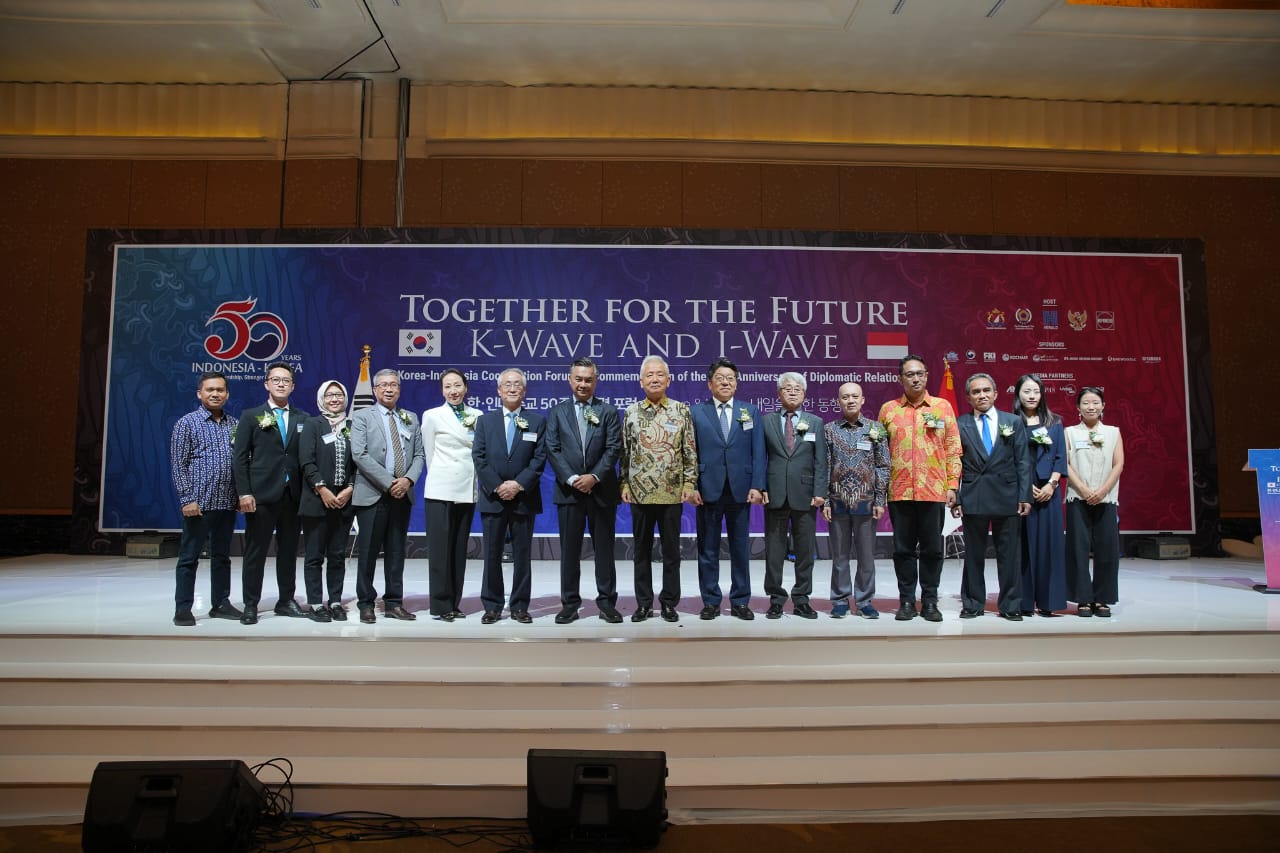
In order to celebrate 50 years of relations between South Korea and Indonesia. On November 30, 2023, the ASEAN Studies Center at Gadjah Mada University was invited to join the Korea-Indonesia Cooperation Forum in Commemoration of the 50th Anniversary of Diplomatic Relations at Hotel Mulia Senayan Jakarta, Grand Ballroom, Indonesia. In this meeting, was raising the theme “K-Wave & I-Wave, Together for the Future”

The Center was part of an academic seminar session commemorating 50 years of Korean-Indonesian diplomatic relations. The session began with remarks from Lee Sang-deok, Ambassador of the Republic of Korea to the Republic of Indonesia, then continued with Congratulations from Lee Kyung-soo, Former Deputy Minister of Foreign Affairs of the Republic of Korea, Vice President of the Korean Council on Foreign Relations (KCFR), and Dino Patti Djalal, Former Deputy Minister of Foreign Affairs of the Republic of Indonesia, Chairman & Founder of FPCI (Foreign Policy Community of Indonesia).

In this session, there were four representatives from the ASEAN Studies Center, namely Dr. Dafri Agussalim (Executive Director), Falikul Isbah (Adjunct Researcher), and Desintha Dwi (Fellow Researcher) as panelists, and Tunggul Wicaksono (Research Manager) as moderator.

In this session, representatives of the ASEAN Studies Center discussed “Steps to Expand Korea-Indonesia Cooperation in Order to Strengthen ASEAN Centrality” together with other panelists, namely GU Bo-kyeung, Research Professor at the Korea Institute for ASEAN Studies, Busan University of Foreign Studies (BUFS ), and KO Young-kyung, Research Professor at the ASEAN Center, Korea University.


The discussion session then ended with a summary of the morning session by KO Young-kyung and Tunggul Wicaksono, and then continued with lunch together.