ASEAN EE Industry: What Now?

Picture: Electronics factory workers in Cikarang Indonesia (© ILO/Asrian Mirza https://www.flickr.com/photos/iloasiapacific/8096440106/in/photostream/)

The heart of ASEAN’s regional economic connectivity, both in intra-regional and extra-regional trade, is the electronic and electrical (EE) industry an industry that has provided millions of jobs and holds ASEAN’s importance in the global economy for decades. The last statistics published by ASEAN in 2015 stated that “electrical machinery and equipment and parts thereof; sound recorders and reproducers, television image and sound recorders and reproducers, and parts and accessories of such articles” the intra-regional total trade in ASEAN is USD 543,751 million and the extra-regional trade nearly tripled with the total amount of USD 1,726,558the highest of all 99 forms of commodities.

It is no wonder, then, why ASEAN included ‘Electronics’ as its export industry focus. But should ASEAN continue to rely on its electronic industry?

The Good News: ASEAN still has time
When the Southeast Asian countries joined the trend of production-sharing or supply-chain in early 1990s that was previously done by the East Asian countries in 1980s, the success was undeniable. Trading parts and components produced by one country for further process and manufacturing have contributed Singapore, Malaysia, Thailand, and the Philippines more than 2.5 million jobs combined. The crisis in late 1990s have indeed disrupted the flow as it was in other sectors, yet it was also the first sector to recover.

For at least another decade, the electronic industry would remain a billion-dollar industry – something that ASEAN needs to take advantage from. In the Global Value Chains (GVC), the electronic industry generally has the highest value-added, second to automotive industry. In Singapore, Malaysia, Thailand, and the Philippines, the value-added is increasingly coming from domestic instead of foreign countries meaning that the local industries are more and more involved and capable. ASEAN member-states hence have the opportunity to utilize the local industries through this chain of electronic industry. Additionally, ASEAN member-states’ purchasing power are getting stronger each year with its growing middle class, and so does the demand for electronic-related goods. Hence, albeit the demand for electronic-based goods in ASEAN depends on the parents-market in which the final-processed goods will be sent, ASEAN has the potential to make its own market for such goods.

The next good news would be, since electronic industry is chain-based, not only does the industry help ASEAN intra-regional trade, it will also strengthens the region’s economic connectivity. It has been known that, along with Non-Tariff Measures (NTM), the lack of intra-regional trade, connectivity, and development gap is still considered as the biggest challenge in realizing ASEAN Economic Community. Electronic industry, through the global value chains, have so far boosted the business connectivity, companies connectivity, and states connectivity amongst the ASEAN countries. Those advantages can surely contributes to the preparation of AEC 2025, especially if ASEAN can further involve Cambodia, Laos, and Myanmar in the scheme, remembering the economic development gap between the three countries and the rest of ASEAN member-states is still substantially high.

The Bad News: time is running out

When the ASEAN member-states first develop their electronic industry, it was export-oriented with low labour-costs as  the main source of its attractiveness. This have worked for decades, but will not sustain for long. While some had argued that China’s rising labour-costs will advantage ASEAN member-states, for the better or worse, labor costs have also been rising in the region – and it will keep rising. Singapore had tasted the consequence of this back in 2011 to 2013, when there is a contraction in its electronics cluster due to the rise of labor and energy costs. This might not yet be the problem for the rest of the ASEAN member-states, but it needs to be remembered that China’s improvements in worker skill, worker productivity, and technology readiness might make The Dragon regain the cost advantage it had lost to Southeast Asia before.

The problem does not stop there. Though it has been mentioned that ASEAN has the potential to create its own electronic market and even the possibility of an ASEAN-owned electronic brand   ASEAN’s ability to do so is questioned. Albeit there have been researches showing that technology transfer exists in the decades developing the industry, workers may only be familiar in creating their assigned components. ASEAN might be the specialty of hard-drives and semiconductors, but generally, that was all. In this case, it is necessary to applaud Malaysia who has been focusing on technology transfer to its people, making ‘technology transfer’ as a ‘recognized profession’.

Finally, full automation and artificial intelligence might still be years away, but the 4th industrial revolution (4IR) is still coming, and the electronic industry will be the industry that will either influence or get impacted the most. ASEAN has indeed embraced one of the core characteristics of 4IR, digital economy, which reflects in the ASEAN ICT Masterplan 2020 – but it has yet to have a plan on overcoming the disruption in its goods-export industry. In ASEAN member-states where electronic industry is mainly focusing on electronic components, 4IR will impact negatively on the workers. ILO reported that Indonesia, Vietnam, Cambodia, and Laos are amongst the countries which workers are very likely to be replaced in automation. ASEAN, who has the credit of ‘less-interested in developing technology’, must start to fix their priorities, go beyond hard-drives and semiconductors, and at the same time making a move in making 4IR technologies inclusive to the SMEs, as it has been mostly undertaken by MNCs and large local enterprise.

Firstya Dizka Arrum Ramadhanty is currently a Research-Intern in ASEAN Studies Center Universitas Gadjah Mada. She is also an Undergraduate Student at Department of International Relations, Faculty of Social and Political Sciences, Universitas Gadjah Mada. She is available at f.dizka@mail.ugm.ac.id.

CREATING A DRUG-FREE ASEAN: HOW FAR HAVE WE COME?

By Jonathan Evert Rayon

Based on the World Drug Report in 2018, 31 million people worldwide suffered from drug use disorders resulting in millions enduring health risks such as hepatitis C and HIV. Drug trafficking is defined by the United Nations Office on Drugs and Crime (UNODC) as illicit trade which involves the cultivation, manufacture, distribution and sale of substances subject to drug prohibition laws, and is a prevalent issue in Southeast Asia. As discussed at the 7th ASEAN Drug Monitoring Network (ADMN) during 5th-7th March 2019, drug cases in 2018 experienced an increase, with most drug cases taking place in Thailand, Indonesia and Malaysia. The fact that over 90 percent of drug offences were conducted by ASEAN nationals despite serious measures taken by member countries, such as the Philippines’ war on drugs or Indonesia’s potential death penalty, emphasises the realisation of a Drug-Free ASEAN remains a challenge.
The Problem of Drug Trafficking in Southeast Asia

Drug trafficking is a major security threat in Southeast Asia which targets people from different backgrounds, ages and genders. Based on the ASEAN Drug Monitoring Report in 2017, there were 357,443 illicit drug cases in the region, with 64.6% of them involving Amphetamine-Type Stimulants (ATS). In 2017, there were more than 300,000 drug users admitted to drug treatment. Furthermore, the worsening drug situation in the region is also linked to ASEAN’s geographical proximity to the Golden Triangle. This 950,000-square kilometre area, where the borders of Thailand, Myanmar, Laos and China meet, has a reputation as the centre of the world’s drug trafficking.

In spite of not being a drug producing country, Cambodia has been affected by regional and international drug trafficking. Located in the Golden Triangle, Cambodia is used as a transit place before drug syndicates transport the illegal substances to third markets. There was also a steep increase of 35.1 percent in the total seizure of drugs in 2017 in this country. In Indonesia, a country’s population which makes up slightly over 40% of ASEAN’s total population, the drug situation also remains problematic. In 2017, the National Narcotics Board and Indonesian National Police uncovered more than 51,000 drug cases with the total seizure of 151.5 tons of cannabis and 3.8 tons of crystalline methamphetamine (or shabu). Similar cases were also reported by Myanmar and Thailand where drug traffickers used a number of techniques in concealing drugs to be distributed or transported to other areas. Although drug abuse may vary, narcotics, namely cannabis, heroin, opium, methamphetamine tablets and crystalline methamphetamine, have been recognised as five major problems in every ASEAN country. Despite the alarming status, data related to the number of drug users remain imprecise as many ASEAN member countries do not conduct regular surveys while some do not even conduct them at all. This lack of consistent data creates its own unique problems.

ASEAN’s Cooperation in Dealing with the Problem of Drug Trafficking

The idea to create a Drug-Free ASEAN first emerged at the 31st ASEAN Ministerial Meeting, held in July 1998, where ASEAN Foreign Ministers signed the Joint Declaration for a Drug-Free ASEAN. The Declaration asserted each country’s commitment to eradicate the production, processing, trafficking and use of illicit drugs in Southeast Asia by the year 2020. Although the idea was formalised in 1998, ASEAN has started to demonstrate its commitment to addressing the issue of drug trafficking since its establishment in 1967. In 2000, at the 33rd ASEAN Ministerial Meeting, all countries agreed to advance the target year to realise a drug-free region to 2015, even though the goal of Drug-Free ASEAN was not yet decided. It was in 2007 that the Association formulated the vision of Drug-Free ASEAN 2015 which was to successfully and effectively control illicit drugs activities and mitigate its negative consequences to society.

The vision of Drug-Free ASEAN 2015 was highlighted in 2009 by the adoption of the ASEAN Work Plan on Combating Illicit Drug Production, Trafficking and Use 2009-2015. The implementation of the Plan was regularly monitored and assessed by ASEAN Senior Officials on Drug Matters (ASOD) and UNODC. Based on its final assessment in 2014, UNODC recommended ASEAN to take significant steps to reduce supply and demand since challenges were still widespread and new threats were emerging. As a result, the regional body adopted the ASEAN Work Plan on Securing Communities against Illicit Drugs 2016-2025 as a continuation of previous work – proposing several activities, starting from preventive education, law enforcement, treatment and rehabilitation, research, alternative development and extra-regional cooperation. In addition, ASEAN member countries have also been cooperating with other non-member countries to implement the ASEAN Cooperation Plan to Tackle Illicit Drug Production and Trafficking in the Golden Triangle 2017-2019.

Even though drug abuse conditions may vary from one country to another, it is important for ASEAN not to leave any countries to face the problem alone. Firstly, a regional problem requires a regional solution. Instead of focusing on addressing the issue alone, ASEAN countries must acknowledge that drug trafficking is often a transnational crime conducted by an extensive criminal network operating beyond national borders. This implies that no country in the region is immune to drug trafficking as each can be targeted as a transit place or a prospective market. As an example, Thailand authorities explained that a large amount of drugs had been moved from neighbouring Laos into Thailand before they were taken south towards Malaysia. Secondly, complimenting national policies which have been implemented by countries, thereby strengthening regional cooperation to combat the issue, also signifies ASEAN’s foundation as a unified organisation. Since its formation, ASEAN has always adhered to one of its principles of effective cooperation among its members. This principle was reaffirmed when all member countries agreed to create a resilient community in a peaceful, secure and stable region with the ASEAN Political-Security Community. Thus, a comprehensive approach is needed to respond to this non-traditional security threat.

All in all, a number of responses which have been taken indicate ASEAN’s resolute commitment to tackling the issue of drug trafficking. However, to promote a Drug-Free ASEAN, all countries must work side by side to get to grips with this non-conventional threat. Therefore, several actions can be taken. Due to different national capabilities, it is recommended that ASEAN establish a region-wide capacities curriculum for law enforcement and provide common language training since the lack of a common language often limits the ability to communicate effectively among countries. Furthermore, it is also crucial for ASEAN member countries to enhance information and experience sharing activities, especially related to border seizure to help create effective strategies to prevent criminals from evading border security checks. In line with recommendations by UNODC, ASEAN is also advised to cooperate with numerous non-governmental organisations and establish regional monitoring to measure the effectiveness of civic awareness campaigns in reducing the demand as high demand is one of the most contributing factors of the increase in drug cases in Southeast Asia.

Jonathan Evert Rayon is an intern in ASEAN Studies Center, Faculty of Social and Political Sciences, Universitas Gadjah Mada

OUT OF JAKARTA: RELOCATION OF INDONESIA’S CAPITAL AND ITS IMPLICATIONS

By Truston YU 

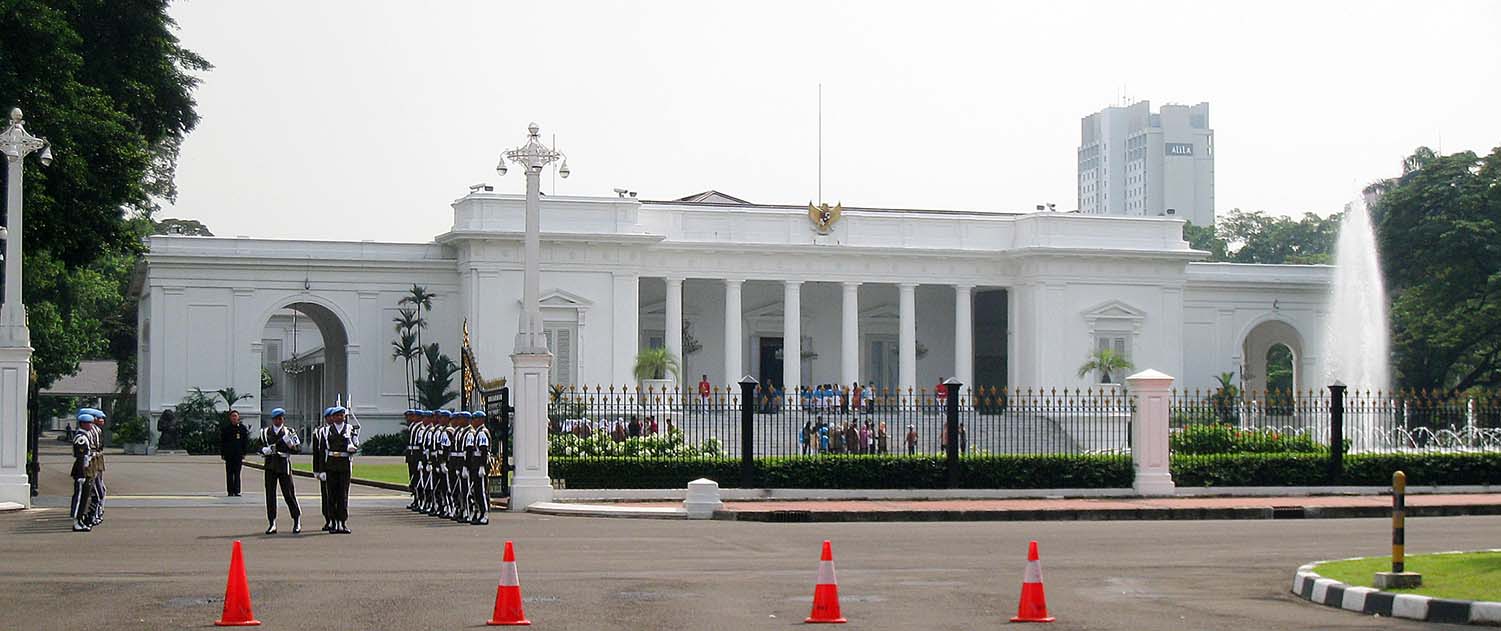
Image: Merdeka Palace Changing Guard by Gunawan Kartapranata

President Joko “Jokowi” Widodo recently announced plans to relocate Indonesia’s capital city to outside Java. Following Myanmar’s move from Yangon to Naypyidaw, Indonesia will be the second country in modern Southeast Asia to relocate its capital city. There are good reasons for such a decision, but there are also many implications which are worth noting.

Since the Dutch East Indies colonial period, the settlement of Batavia has been the de facto capital city. Over the generations, it has gradually evolved into the modern Jakarta as we know it. With the number of inhabitants equivalent to the next three largest cities combined, Jakarta is the primate city of Indonesia. Together with the neighboring towns and regencies including Bogor, Depok, Tangerang and Bekasi, the Greater Jakarta megalopolis, known as “Jabodetabek,” boasts a population of some 28 million, comprising ten percent of Indonesia’s total population.

Rapid urban development is not without its side effects. The living standard is deteriorating, so is the environment. The congested streets, along with the heavy air pollution caused by the traffic, are a nightmare for commuting workers and students alike.

Jakarta has long been prone to flooding. Most recently, it has been pointed out that the city is rapidly sinking, and 25% of its land area may be submerged within a decade. Clearly, the massive population is taking its toll on the city’s very foundations.

Then-Governor Basuki had put in efforts to mitigate the floods by clearing the waterways; Incumbent Governor Anies Baswedan also pointed that the Jakarta government “had focused on expanding infiltration wells to help the soil better absorb rainwater.” Whether such policies are enough to turn the tides, is questionable.

Java dominates every aspect of the country, leading to the dissatisfaction of other islands. While it is undeniable that Java is the most populated island and is situated at the center of the country, Indonesia has a much greater diversity which seems to have been overshadowed by the focus on Java. The incumbent government has put in efforts in channeling investment to other islands such as Papua, and the economic corridors of North Kalimantan, North Sulawesi, North Sumatra, and Bali. A capital city outside of Java would be a symbolic acknowledgment of the non-Java communities, a further manifestation of the principle “Unity in Diversity.”

There is a dilemma regarding the relocation of offices away from Jakarta. If there are too few jobs that would be moved to the new capital, the commuter congestion problem would hardly be alleviated at all. On the other hand, if there is a large number of jobs that would be relocated to the new capital, the Greater Jakarta region risks structural unemployment.

The business sector has raised their concerns too. Since some of the businesses would need frequent visits to government offices for lobbying and matters pertaining to regulations, it would be inconvenient if the government agencies are located far away from the business headquarters. Corporate and government are, after all, closely related. However, in any case, Indonesia would not be the first – precedents of New York City, Toronto, and Shanghai have shown how the hub of business activities do not have to be the capital cities.

Moving the capital also entails moving the embassies. Indonesia plays a significant role in the global arena and Jakarta is home to some one hundred ambassadors from countries which share diplomatic ties with Indonesia. Though it may be troublesome for the diplomatic missions currently based in Jakarta, a constructed capital city could allow for a better arrangement for the foreign offices – a designated district could be drawn out for all the embassies, bringing convenience and allowing for a more centralized security measure. The current embassies in Jakarta would most likely remain consulates-general given the economic importance of the city and size of the expatriate community.

The fate of the Association of Southeast Asian Nations Secretariat would be an interesting point as well. It is likely that the ASEAN Secretariat will remain in its location on Jl. Sisingamangaraja. After all, there is no compelling reason whatsoever for a regional intergovernmental organization to have to relocate together with a member state’s capital.

The implication of this is that while Jakarta may no longer be the capital of Indonesia, it remains the seat of ASEAN and could arguably be called the capital of “Southeast Asia.”

This project is not and should not be seen as the abandonment of Southeast Asia’s greatest megalopolis. Moving the capital is not the end for Jakarta or Jabodetabek – it will still be the place where most economic activities take place. Jakarta has to continue developing, improving its public transport infrastructure, and tackling its environmental challenges.

A new chapter for Jakarta will begin soon – retaining its primacy as the center of Southeast Asia’s largest megalopolis but tasked with challenges to raise the living standards of its citizens and prevent itself from sinking into the muds.


Truston is self-proclaimed Southeast Asianist, politics sophomore and research assistant on Southeast Asia at the University of Hong Kong. Born in Singapore but calls the West Java town of Cirebon home, Truston considers Southeast Asia as an integral part of their identity. Outside Southeast Asian Studies, Truston’s research interests also include Public International Law and Sustainability. 

My email contact is trustonyuofficial@gmail.com

ASEAN, EU collaboration needed to resolve palm oil dispute

Image: Palm oil mill in Sabah, Malaysia © CEphoto, Uwe Aranas

The failure  to upgrade ties between the EU and ASEAN to a new strategic dialogue partnership at the 22nd ASEAN-EU Ministerial Meeting was another blemish on relations between the most institutionalized regional groupings of the developed and developing world.

The outcome of the talks, however, do not come as a surprise and reflect that the EU is more concerned with upgrading relations than ASEAN. ASEAN member states, meanwhile, are using the interregional negotiations to leverage national agendas.

While the EU and the majority of ASEAN member states were ready to conclude an agreement, Malaysia and Indonesia insisted the EU drop its plan to phase out the use of palm oil in biodiesels as stipulated under its Renewable Energy Directive.

The EU purports that its palm oil policy is a global policy. Nearly 90 percent of the world’s palm oil, however, comes from Southeast Asia, mostly from Indonesia and Malaysia. The commodity is one of Indonesia’s most important sources of export revenue, worth US$19 billion annually, and the EU is its second biggest export destination after India. Around half of the EU’s palm oil imports are used for biodiesel.  The EU now claims the palm oil industry is responsible for deforestation, hence it is phasing out its use in biodiesels.

Given the importance of palm oil to the Indonesian and Malaysian economies, they have pushed a combative counter-narrative against the EU’s palm oil policy.

They have accused the EU of protectionism and discrimination, as the phasing out of palm oil will create demand for alternative vegetable oils more readily found in Europe, such as soybean or rapeseed oils.

Concurrently, they have appealed to the EU as a normative power that supposedly acts as a force for good by promoting the narrative that the palm oil industry supports the Sustainable Development Goals (SDGs).

“Refusing to use palm oil is the same as rejecting the SDGs,” Deputy Trade Minister AM Fachir said as reported by The Jakarta Post  . Malaysian Foreign Minister Saifuddin Abdullah, meanwhile, told Bloomberg that Malaysia was preparing retaliatory measures. Saifuddin confirmed that palm oil was behind the impasse between the EU and ASEAN.

Significantly, upgrading interregional relations is more important for the EU, even if only in name.

The EU is looking to reinforce the importance of regionalism and interregional cooperation, given that Brexit and rising nationalism in EU member-states has dented its self-perception as a model for regional integration.

Upgrading relations would further anchor the EU in a geostrategic and economically important region. US President Donald Trump’s ‘America First’ Policy, as well as the trade war with China, has prompted the EU to promote the international rules-based system, a view that ASEAN shares.

ASEAN as an intergovernmental organization, however, takes a consensus-based approach. ASEAN member states thus appear to be using negotiations to leverage and amplify the national concerns of palm oil producers. It is unsurprising, therefore, that the issue of palm oil has derailed talks.

Foreign ministers still agree in principle on upgrading relations to a new strategic dialogue partnership but have said in a joint statement that it is “subject to details and timing to be worked out”.

Moving forward, the EU will rely on its recent experience in which threatening to close its market can lead to a change of behavior with external partners. This was evident with Thailand, the world’s third-largest exporter of seafood, which pushed through reforms to tackle illegal fishing after the EU stated that it would ban imports from the country.

Indeed, Indonesia and Malaysia are strengthening their sustainable palm oil certification systems. The Malaysian government has moved to ensure all palm estates are certified as sustainable by the end of this year, with special assistance extended for smallholders. On March 1, Malaysian Primary Industries Minister Teresa Kok said the country would halt the expansion of oil palm plantations to 6 million hectares in response to the negative campaign against palm oil and EU pressure.

Such high-pressure tactics, however, will only increase ASEAN member state’s perception that the EU is belittling toward them.   The EU must communicate its palm oil policy more clearly, as it is evident that there are conflicting accounts of what the policy entails and what measures are required of palm oil producers to alleviate EU pressure.

Moreover, the palm oil issue between the EU and ASEAN member states has largely been played out at the top levels of government. To make further headway, there needs to be greater incorporation of lower levels of government, regulatory bodies, as well as smallholders and large estate representatives to ensure the impasse is dealt with holistically and collaboratively.

Achieving this will ensure that upgrading relations to a new strategic dialogue partnership will be more than just a public relations exercise, and a boost for regionalism and interregional cooperation at a time when it is sorely needed.


The writer is an emerging markets analyst and editor. Find him on Twitter @ShahSurajBharat.