AYIEP Participants Learn from Asian Start-Ups

After joining International Seminar on  ASEAN 50th Anniversary at the 1st day, the ASEAN Youth Initiative Empowerment Program (AYIEP) continues by presenting two public lectures from young, creative digital entrepreneurs. Mr Alfatih Timur (also renowned as Timmy), the founder of Kitabisa.com –the first Indonesian digital crowdfunding platform—shared his experience alongside Mr Makshud Manik, the founder of youthop.com, a Bangladeshi platform for youth opportnities information.

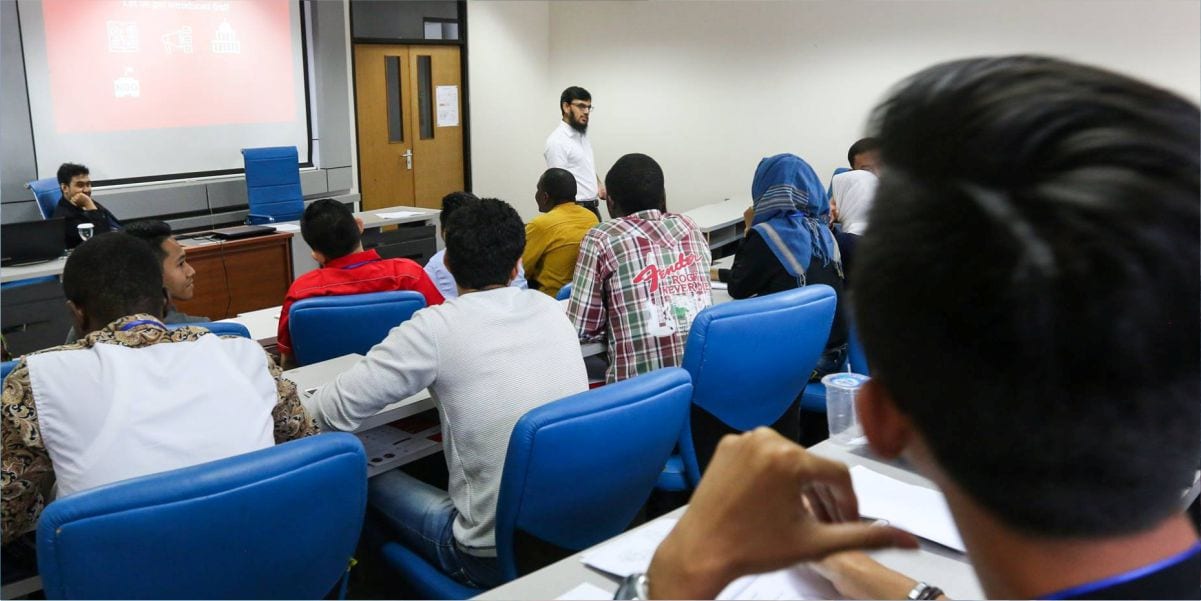
In the first session, Mr Timmy shared his experience by introducing his crowdfunding initiative to Indonesian digital audience since 2013. “We created a platform to help people who need financial assistance by facilitating campaign in digital media. It succeeds with many campaigns funded even exceed 100% of their proposed target”, said Timmy in front of 24 AYIEP participants.

A former student activist at the University of Indonesia, Timmy’s achievement has been acknowledged by Kompas, the most prominent Indonesian newspaper, and Forbes. His initiative was also endorsed by Professor Rhenald Kasali, his mentor and Professor of Business at the University of Indonesia.

Timmy also expanded his digital charity to help people abroad, including Rohingya.  “As long as there are initiatives, we are keen to help”, said Timmy.

The second session presents Mr Makshud Manik, the co-founder of Youthop.com. He provided platform for Asian youths to share information of opportunities, such as; conference, workshop, and summer schools.

“We are fortunate to have Indonesia and ASEAN as the biggest viewer of our website”, said Makshud, who also works as a Senior Researcher for Dhaka-based think-tank Institute for Policy  Advocacy and Governance (IPAG).

With emerging global connectivity, ASEAN remains one of the biggest shareholder in world market. “It should be responded by digital innovation, which saw ASEAN as a growing user in the latest decade”, said Makshud.

He also addressed some challenges for digital innovation. “We also face the emergence of both deep webs and dark webs, which oftenly misused digital platform for transnational crime. Our innovation try to encounter these trends by providing access and opportunities for young people”, Makshud added.

The ASEAN Youth Initiative Empowerment Program was held from 23-29 July 2017. The short course program includes series of Public Lectures, Seminars, Working Groups and recommendation drafting session which aimed to enhance global and regional connectivity.

Ambassador Ong Keng Yong: Digital Transformation is the Future of ASEAN Integration

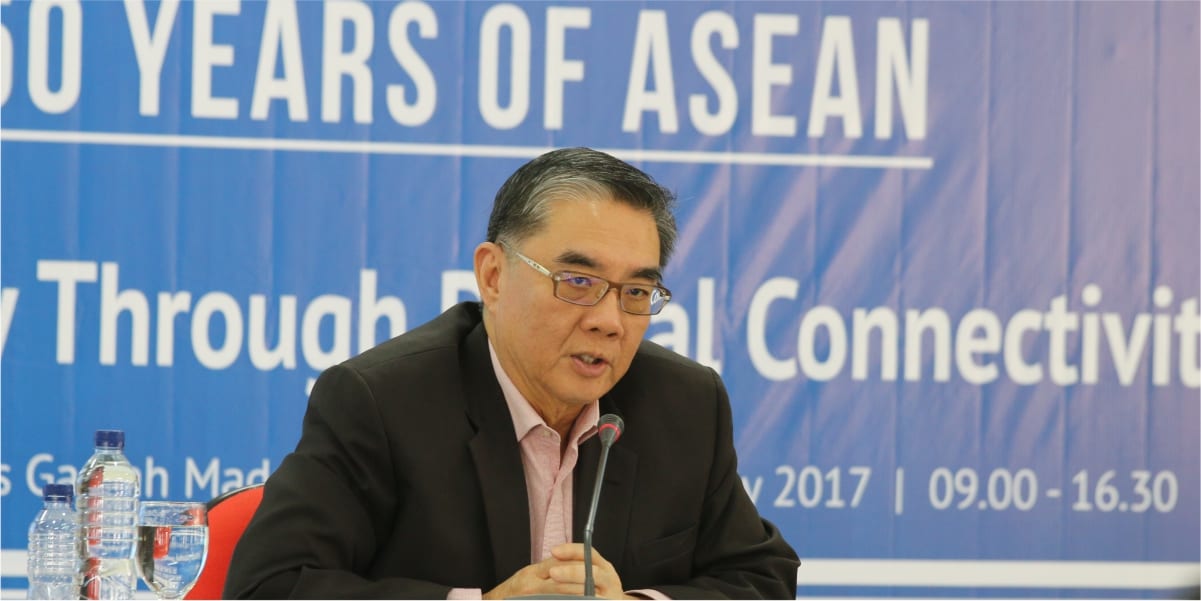
ASEAN’s 50th anniversary should be addressed by nurturing digital integration, says H.E. Ambassador Ong Keng Yong, former ASEAN Secretary-General in FISIPOL UGM  (27/7).

Speaking as a Keynote Speaker at an International Seminar held by ASEAN Studies Center UGM, Ambassador Ong highlights the importance of ICT development in future ASEAN integration, which has been set up since his tenure as ASEAN Secretary General.

“Today we face rapid technological development following the rise of ICT platforms in the region, particularly in Indonesia. ASEAN needs to foster digital innovation and strengthen local economies through digital platform,” said Ambassador Ong.

He highlights the progress that has been advanced in ASEAN since early 2000s, which involved the creation of ASEAN ICT Masterplan and other regional policy frameworks in tackling digital divide.

“ASEAN is indeed not perfect, but we are keep progressing and ASEAN is the only regional organisation we have now”, said Ambassador Ong.

The International Seminar on ASEAN’s 50th Annivesary was held in conjunction with the 2nd ASEAN Youth Initiative Empowerment Program (AYIEP), an annual program by ASEAN Studies Center UGM to foster social awareness among ASEAN youths. The program is held from 23-29 July 2017 in Yogyakarta, following the success of the 1st AYIEP in August 2016.

Several prominent figures in ASEAN are invited to deliver speech and lectures. Besides Ambassador Ong, the speakers are Ambassador Djauhari Oratmangun, Senior Adviser for Indonesian Minister of Foreign Affairs, H.E. Mr. Stuart Shaw (Political Counsellor at Canadian Mission to ASEAN), Alfatih Timur (Founder and CEO of Kitabisa.com), and Makshud Manik (Founder of Youthop.com). Ambassador Foster Gultom (Senior Official at the Directorate-General for ASEAN Cooperation) and Dr. Poppy S Winanti (Vice Dean of FISIPOL UGM) were also present to chair the sessions.

There are 24 participants from neighbouring ASEAN countries and outside the region who participate  at the Program, including from Vietnam, Phillippines, Japan, Egypt, and Indonesia. Several exchange students from African countries also joined the program. They will exchange ideas at Working Groups and visit some digital hubs in Yogyakarta as a part of the program.


Digitalizing ASEAN (2): Three Key Pillars

In the second of two-series article, we introduce ASEAN Youth Initiative Empowerment Programme, a one-week program for ASEAN Youth organized by ASEAN Studies Center, Universitas Gadjah Mada. The theme of the program is “Digitalizing ASEAN”, which will be explained in this article and the following article.

We have acknowledged the importance of “digitalizing ASEAN” as an inseparable part of ongoing regional integration. What is to be done in the future? What would ASEAN youths do to socially integrate people across the region  through emerging digital platforms?

In this context, we develop three pillars of “digitalizing ASEAN” that encapsulates the need for digital integration in ASEAN, namely (1) digital diplomacy; (2) digital activism; and (3) digital citizenship.

Where do we start? Standard understanding on ASEAN and regional integration project usually depart from the relationships between “state” and “society”. Two positions are in contention. The first view perceives ASEAN as merely “state project”. Diplomatic practices makes ASEAN. Diplomats represent ASEAN. The future of ASEAN, from this viewpoint, is the future of statecraft and diplomacy.

We argue that understanding ASEAN merely from a “statist” lens is not sufficient. ASEAN is also built upon the “people” –businessmen, activists, academics, youths, religious leaders and many other elements in a complex society. This is the virtue of the second view, that perceives ASEAN as a relationship between state and non-state actors.

Thus, we need to go beyond “traditional” understanding of ASEAN as merely “state-led project” to ASEAN as a complexity. This is how “digitalizing ASEAN” should be perceived. “Digitalizing ASEAN” isn’t merely a state-led program; it should also be at the heart of people-to-people interaction in the future

This is where the role of young people is essential.

From this viewpoint, we could identify two key pillars of “digitalizing ASEAN” in the future: importance of digital diplomacy in ASEAN and the growing digital activism across the region. Both of them are intertwined. The complexity between the two pillars be framed under the idea of digital citizenship: a complex relationship between state, markets, and civil society in a newly established digital environment in Southeast Asia.  

First Pillar: Digital Diplomacy

The traditional conception of “diplomacy” often refers as the relationship among states conducted by a formal representative. However, in this globalized era, the important of citizens role in could not be neglected. For example, civil society organisations have used diplomatic apparatuses to advance their interest to embrace ‘alternative regionalism’. Various elements of peacemakers have been involved in the so-called “multi-track diplomacy”. Recently, multinational corporations have also considered as an actor of diplomacy through lobbying and trade.  

It is thus safe to say that emerging digital landscape creates opportunity for a new platform for diplomacy, too. Jan Melissen calls this  trend as ‘digital diplomacy’. Indonesian Foreign Minister, HE. Retno LP Marsudi, has also used similar term in one of her speech.

Digital diplomacy come as a solution to address the complexity of regional politics. In Digital Diplomacy, the growing use of ICTs and social media platforms by a diplomat is acknowledged as a part of diplomatic practices. As a consequence, a diplomat needs to engage with ‘digital native’. Diplomatic pratices have since transformed: from a formal roundtable meeting to livetweet; from an official press conference to a live Facebook video.  

The instrument might be changing, but the purpose is still the same: to achieve foreign policy goals. It benefits not only diplomats, but also ordinary citizen. This is obviously an opportunity to further bring ASEAN at the heart of its citizen.

Second Pillar: Digital Activism

As the diplomatic practices have been evolved, our understanding of state-society relations in ASEAN should be updated, too. ASEAN not only encompasses state-facilitated activities through ‘formal’ diplomatic practices, but also through social movement. We need to acknowledge  the rise of social movement and NGO activism in ASEAN, including youth.

ASEAN has also witnessed the rise of various youth movements that take part in advocating youth-related issues in ASEAN. The rise of these movements is also accompanied by the use of technological devices, such as mailing list and other forms of media and communication.

Rapid technological development brought by ICT industries in the region connect the people across the region. However, it is not necessarily new. In Indonesia, the Reformasi itself has been the very product of the use of internet in driving social change. The internet connects not only pro-reform activists in Indonesia but also with broader social movements abroad .

In emerging youth activism in ASEAN, the growing uses of ICT is inevitable. Telegram, Whatsapp, and Facebook has been the main medium of interaction among the young people. They publish the program through Instagram, Twitter, and connected Website. Some of them uses it for political purposes –a campaign to release Mary Jave Veloso, for example.  Some of them merely spread the opportunities for regional events. Some of them are embracing social entrepreneurship. And so on.

It is thus necessary to understand how social activism in ASEAN is forged through the medium of ICT. Let us see this happen in ASEAN.  

Third Pillar: Digital Citizenship

What connects the first and second pillar? We introduce the third pillar, digital citizenship. This might be a complex concept. Put it simply, we regard digital citizenship as a complex relationship between state and society in the region. It connects digital diplomacy and digital activism in everyday life.

The emergence of ICT industries has raised further questions over civic engagement and political life. So does in ASEAN. It brings us questions as to where the rapid digital advancement would be heading to. Would it tackle inequality among the people? Or would it instead raise racist sentiment in social media?

As the digital society is taking further steps forward, a good sense of digital citizenship is required. ASEAN should raise a sense of ‘collective identity’, which is lacking in the people across the region due to the lack of regional engagement in the past.

Taking together the idea of digital diplomacy and digital activism, the ICT development in the region should not be merely understood as a part of growing ‘regional market’. It should be seen as a tool for cultivating active citizens participation, too. Moreover, both digital diplomacy and digital activism should craft a more vibrant sense of belonging between ASEAN citizens.

Thus, we put the idea of digital citizenship as a part of our call for ‘social integration’ in ASEAN. It should be embraced by all ASEAN people in the future. Information and Communication Technology should not be put as an end in ASEAN integration. Instead, it should be utilised as a means to put forward deeper integration among ASEAN citizens and redefine our identity through engagement with technology.

The Rationale for AYIEP 2017

So here were are. We attempt to incorporate these key pillars by introducing the The 2nd ASEAN Youth Initiative Empowerment Programme (AYIEP) in 2017, which will be held between 23-29 July 2017 in Universitas Gadjah Mada, Yogyakarta. All of the programs are organised along these key pillars. We hope it consistently brings the participant to take part in our call for “digitalizing ASEAN” throughout the programs.

The 1st AYIEP has been successfully put forward the agenda for bringing social awareness among ASEAN youths, with various visits to NGOs in Yogyakarta and Working Groups. Critical thinking is at the heart of our event.

The 2nd AYIEP embarks upon the success of the previous program to bring social awareness and embrace critical thinking through digital platform. We intend to address the need for regional integration by bringing about youths across the region. To do so, we adapt three sub-themes engage all of the elements of youhts from all ASEAN countries, as well as other regions that might be interested with ASEAN-related issue.

We have a simple mission here. We pledge to pave the way for “digitalizing ASEAN” through youth engagement. So that, ASEAN could be more “people-oriented” and “people-centred” in the future. Let us see this happen in the future!


Ahmad Rizky Mardhatillah Umar is the Executive Secretary of ASEAN Studies Center, Universitas Gadjah Mada

Digitalizing ASEAN (1): What It is and Why It is Important

In this first series of article, we introduce ASEAN Youth Initiative Empowerment Programme, a one-week program for ASEAN Youth organized by ASEAN Studies Center, Universitas Gadjah Mada. The theme of the program is “Digitalizing ASEAN”, which will be explained in this article and the following article.

ASEAN is now 50 years old. We are now witnessing the age of rapid technological development as well as greater connectivity in the region. We are also stepping forward into ASEAN Community, which has been implemented since 2015.The rapid development on regional economic cooperation under the so-called ASEAN Economic Community (AEC) demonstrates high commitment of ASEAN member countries to become not only the largest market, but also to establish a form of collective identity.

ASEAN has declared to be a “people-oriented” and “people-centered” organization in 2015. The consciousness of shared culture, geography, and history at the community level has bound the peoples together. the importance of ASEAN as a regional organization is now becoming a vehicle to create a more cohesive and united regional community.

The complexity in world politics necessitates ASEAN to embrace a form of ‘social integration’. The recent regional outlook from ASEAN Studies Center UGM has showed that the current trend in 2017 has showed a decline of regionalism, the rise of intra-regional problems related to economic growth, social cohesion, and some degree of political uncertainty.

ASEAN, therefore, needs to embrace a non-traditional form of integration. This is where the idea of digital integration comes to the fore. Digital integration does not only means greater connectivity among people across the region –it also calls the young people to embrace a sense of collectivity. Digital integration supports ASEAN to be a ‘people-oriented’ and ‘people-centered’

Against this backdrop, we call for the further steps towards ‘digitalising ASEAN community’. This notion constitutes the central theme of ASEAN Youth Initiative Empowerment Program, an annual event of ASEAN Studies Centre, Universitas Gadjah Mada that will be held in 23-29 July 2017.

Why digital integration?

Information and Communication Technology is the most important issue in the world politics in at least the last two decades. The invention of the worldwide web, the growing IT systems, and connectivity across the world, as well as rapid use of technology have largely contributed to the advancement of global society. It connects, along with a globally-connected IT systems, a quantum leap in people’s ability to communicate both one-to-one and one-to-many and also access to knowledge, are unlimited.

Klaus Schwab called this recent phenomenon as the fourth industrial revolution. It raises questions over how to deal with Big Data, not only in terms of ‘technological advancement’, but also in terms of the changing international order.

It also necessitates International Relations scholars to rethink the relationship between digital revolution, intergenerational changes, and the transformation of international order.

The concept of ‘digital revolution’, however, is not necessarily new in International Relations. Following rapid ICT development in some countries, several global governance institutions has brought about the issues of ICT governance as their main programme. The United Nations, for example, set up a task force on Information and Technology and several initiatives to address digital divide since 2000.

ASEAN is also adapting to this trend by establishing the ASEAN ICT Masterplan (AIM) in 2009. The first completion report was due in 2015 and was continued until 2025. It aims to bring ASEAN member states towards a ‘digital revolution’ by 2025 through many digital platforms and programs—the “smart city”, financial technology, as well as e-commerce.

Yet, we need more. With growing ‘digital integration’ in regional level, ASEAN still needs to deal with increasing development gap in the regionASEAN is also struggling to resolve the classic ‘digital divide’, as well as enhancing the participation of young people across the region.

ASEAN ICT Masterplan, so far, has only a little to offer to overcome these problemsm, given the limit of ASEAN integration.

But it does not mean ASEAN should abandon the ongoing ICT-related regional projects. With a large and youthful population increasingly equipped with smartphones, ASEAN has an opportunity to pioneer the development of new digital services, especially advanced mobile financial services and e-commerce. These sectors are likely to give rise to digital champions that will lead the way for the broader economy.

What ASEAN needs to do, nevertheless, is to integrating the ongoing digital integration in regional level with rising youth participation in the region. The future of ASEAN lies in the development of digital technology. It also necessitates ASEAN to embrace young people –those who are considered as ‘digital native’— to consider their special attention to the task of connecting community in ASEAN. Digitalizing ASEAN also can increasingly enable citizens to engage with governments as voice their opinions.

The advancement of technology should be a good platform for ASEAN to foster connectivity among people. This is also useful to embrace a culture of good “digital” citizenship, thus ensuring the realization of “people-oriented” and “people-centred” ASEAN.

Nevertheless, the rise of digital technology should also be followed by critical perspectives. Recent series of article by OpenDemocracy and Sheffield Political Economy Research Institute showed that the emergence of digital use in everyday economy (which is also renowned as ‘gig economy’) also creates many problems in workforce, labour-related issues, and broader socio-economic aspects in everyday life.

In Indonesia, for example, several start-up companies operating in transportation, such as Grab, Uber, or Gojek have clashed with ‘conventional’ ojek or Taxi drivers. Digital integration, therefore, does not entirely positive. Various social problems emerged from this development, which necessitates further analysis on how to resolve it. Addressing this issue requires creative and critical thinking from the young generation.

Here lies our challenge to talk about digital society in regional context. This is why we desperately need a more concrete action for “digitalizing ASEAN” in the future.


Ahmad Rizky Mardhatillah Umar is the Executive Secretary of ASEAN Studies Center