Glimpse of Hope: Student-led Protest in Malaysia

Feature - Myanmar Student

Dedi Dinarto – Research Assistant at ASEAN Studies Center, Faculty of Social and Political Sciences, Universitas Gadjah Mada

Encouraging students to actively participating in protest movement remains arduous. The busy academic activities and full-time organizational obligation pushes student to stay calm in campus without any centrifugal way of thinking. Living under strict and rigid academic practice and value, most of the students prefer to stay behind the desk and explore the reality through cyberspace as well as preparing their self-capacity for future professional job. On the other hand, there are also small amount of students whose initiative are to oppose against authoritative, corrupt, and repressive government. Given such ‘intellectual power’ to analyze and criticize the social contract, these students come up to organize counterbalance the praxis of statehood. In the last few days, the latter is real reflects on the Malaysian student-led protest that voices out the resonance to arrest ‘Malaysian Official One’ under the yell of ‘Tangkap Malaysian Official One.’

This rally should be seen as a positive signal since students start to participate and speak out of what is happening to their country and how it should be.

Despite the fact that Universities and University Colleges Act 1971 (UUCA) hampers the active participation of students within political arena, students have turned into political machine to fight against government. According to Aslam Abd Jalil, a protester who had also been graduated from the Australian National University, TangkapMO1 has showed the significant role of students in political contestation. Students are not only living under the traditional academic cage, but also transcending beyond the limit and fighting for the future of nation. In a broader aspect, he assessed that the rally would cause turbulence towards ruling party, thus affects the ruling party’s popularity. However, this opportunity will not give any significant change to the Malaysian politics since the opposition party is in a mess.

Moreover, TangkapMO1 also signifies the neutrality of student from political party.

Anis Syafiqah Mohd Yusof, spokesperson for the TangkapMO1 and the member of Persatuan Mahasiswa Islam Universiti Malaya (PMIUM) mentioned that the students are non-partisan. She loudly voiced out that this student-led rally should not be used by political parties to serve their interest. Although it does not mean that students reject the support from political parties to fight for universal values and justice.

This case reveals what Eep Saefullah (the author of Catatan atas Gagalnya Politik Orde Baru 1998) mentioned about the economic and social transformations that generate the rising of active and passionate students. The higher opportunity to access education will lead to the economic vertical mobilization. The growing of critical and well-informed community is inevitable. In the context of Malaysia, this should be seen as an opportunity since the data reported from World Bank shows that the youth literacy rate in Malaysia up to 2010 is 98.4%.

However, under the authoritative political architecture, it is insufficient for students to only organize and do protest in public space. The need to build and develop discourse within society is utmost. Breaking down the strict relation between government and society should be built under the skeptic view. Therefore, spreading discourse and opinion on what has been going on would be more significant. Otherwise, the movement will be regarded as fragile and extemporaneous.

The 49th ASEAN: Who Does What and How?

flag

Dedi Dinarto – Research Assistant at ASEAN Studies Center, Faculty of Social and Political Sciences, Universitas Gadjah Mada

Indonesian scholar Shofwan Al Banna Choiruzzad through his prominent book titled ‘ASEAN at the Crossroads of History’ criticizes the history of ASEAN which never escape upheaval. As an institution that is designed close to the important historical events in the region, ASEAN has flexibility properties serving both opportunities and downsides.
ASEAN has now entered the age of nearly half a century indicate a lengthy process of institutionalization aspects. The question would be to what extent has ASEAN been running?

To answer these questions, then there are two main layers that can be considered. First, ASEAN as an institution. Second, ASEAN as a community.

Establishment of ASEAN in 1967 is intended to fulfill both internal and external factors.

The former means to rediscover the structure of national economic growth and development, a peaceful atmosphere at that time provides an important precondition for Southeast Asia countries. Driven by the national interest, the five founding countries (Indonesia, Malaysia, the Philippines, Singapore, and Thailand) to immediately establish a functional institution.

On the other hand, the Cold War constellation led by bipolar power structure becomes a threat to the creation of the peaceful and neutral region. Under ASEAN framework, ASEAN member countries could eliminate as well as keep of the threat of communism.

These two main factors then pushed ASEAN member countries to create ZOPFAN (Zone of Peace, Freedom, and Neutrality) treaty.

From the neoliberal institutionalist perspective, the step undertaken by the ASEAN founding members is an attempt to minimize transaction costs in order to meet national interests. In other words, common interests are first defined off the international context, and then institutions are established by state actors to facilitate the achievement of their joint interests (see Keohane, 1989; Jupille and Caporaso, 1999).

However, current developments indicate ASEAN declination of the institutional aspects. This is partly reflected in the failure of ASEAN in dealing with the South China Sea case. As an institution, ASEAN failed to agree on unified voice in the face of a credible threat to the region yet neglecting the security of sea as a vital element of regional stability.

Even, it is also implicitly indicates that the ASEAN member countries are not willing to commit towards something that is not an issue for a particular country. In the context of South China Sea, the non-disputants such as Cambodia, Lao PDR, Singapore, Thailand, and Myanmar would not take a credible stance because it would undermine the logic of the transactional cost efficiency which is expected to come from ASEAN.

In the end, ASEAN will only be used as a ‘stepping stone’ by member states. As long as it can freshly prepared and maximize the potential gains to the member countries, ASEAN would still be relevant.

On the other hand, ASEAN can also be seen from the aspect of community. This has to do with the view that ASEAN is a group of countries that are bound on the role of ideology, rules, and norms. Relations between countries are prepared on social expectations rather than utility maximization calculations.

In other words, institutional routines are followed even when there is no obvious self-interest involved (see March and Olsen, 1989; Finnemore and Sikkink, 1998).

The main purpose of connecting people between countries is to construct something as an act which brings into being a subject or object that otherwise would not exist (see Fierke, 2007). This serves as driving factor encouraging the emergence of a community of discourse among member states are organized into three pillars of the ASEAN Community in 2025 include the issue of political-security, economic, and socio-cultural.

Nevertheless, ASEAN is still experiencing a significant issue in encouraging regionalism at the community level. Acharya (2004) was doubting the possibility of ‘participatory regionalism’. Even though several wider NGO-based regional institutions, such as ASEAN Civil Society Conference/ASEAN People’s Forum (ACSC/APF) and Asian People’s Advocacy have fought for people’s voice, the case of human rights abuse and trafficking remains appeared on newspaper’s headlines.

Thus, these multi-layer view provides us a reflective insight. To date, ASEAN serves as a political product working simultaneously on both institution and community. It remains a great competition between ‘the logic of consequences’ deemed by States and ‘the logic of appropriateness’ conceived by NGOs as the representative of community. This signifies the multi-interpretive of ASEAN as both an institution and community. Therefore, the development of ASEAN in the future would be depending on who does what and how. It defines the possibility of all agents to shape ASEAN either to remain state-centric or community based.

From a Security Regime into a Security Community: Is it Time?

Feature - Terrorist

Habibah H. Hermanadi – Research Intern at ASEAN Studies Center UGM

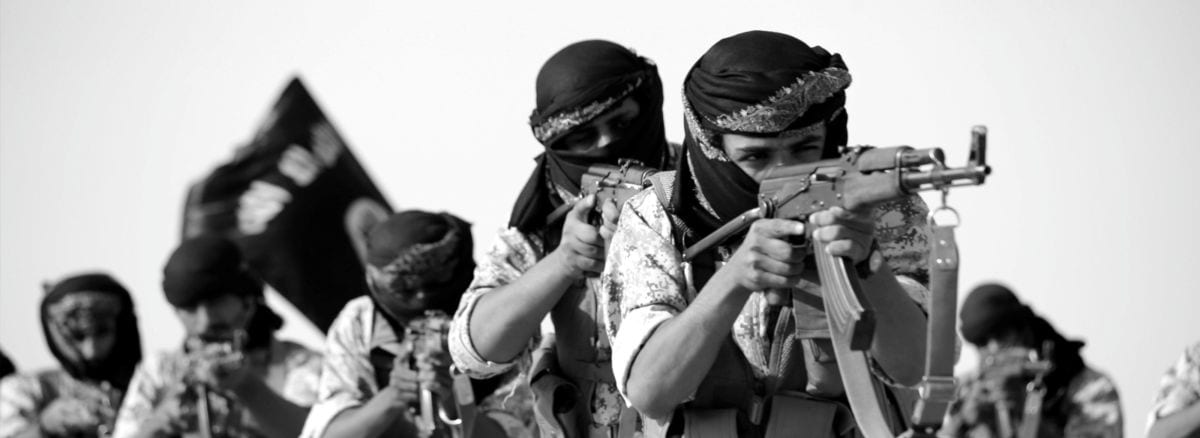
2016 begun with yet another terrorist attack to one of the ASEAN member states, Indonesia, the attempt of suicide bomb in Jakarta backed up by the currently emerging terrorist group Daesh surprisingly resulting in the famous #kamitidaktakut internet sensation which means we are not afraid, a sense of solidarity among Indonesians to resist the terror. Daesh or known as Islamic State (IS) is currently expanding their influence beyond Middle East and North Africa towards Asian regions with strong ideological roots fighting for the return of Islamic Caliphate. Their attacks went continuously in 2016 throughout Europe and Asia, the group is known for spreading terror and grievance by utilizing these attacks and propaganda. One of the most viral propagandas was recently uploaded in youtube—a video based social media depicting dozen of young Indonesian and Malaysian children who were armed and told to ‘liberate’ their homelands.   

Another notorious terrorist group which identifies itself as Abu Sayyaf, located in Philippines, has been causing distress in the Southeast Asia region since 2004, the group spreads regional terror after the very recent case where the group kidnapped 7 Indonesian sailors last month and now 5 more Malaysian fishermen were abducted around Sulu, Philippines. The group had shown extreme gruesome hostility towards the government by sending visual threats through the act of beheading, it was  considered as obscenely brutal way when it is not done in one fell swoop of a sword, but with slashes and hacks from a hunting knife.

On the 36th ASEANPOL Conference, Malaysian Prime Minister Datuk Seri Najib Razak stated the importance of unity to fight off terror, in his speech he clearly mentioned “Daesh and its cruel, twisted ideology have no place in our peaceful, diverse, tolerant country and nor in our region,” he also condemned Abu Sayyaf and their recent abduction. The Prime Minister put on emphasis on the role of stronger ASEAN by taking example of Malaysia who had adapted the Security Offences (Special Measures) Act or Sosma; the Special Measures against Terrorism in Foreign Countries Act; the Prevention of Terrorism Act and the National Security Council, by implying these strong counterterrorism measure within Malaysia he had been facing many critics which questioned the government’s intentions yet he was unapologetic for the action that he took when it comes to the safety of the citizens. Similar reaction was shown by the newly elected President of the Philippines, Rodrigo Duterte, where he appointed the military to enhance the capability to search and engage the rogue and lawless elements, in his words, “the Armed Forces of the Philippines will be applied to crush these criminals who operate under the guise of religious fervor.”

The strong remark on the conference was dearly welcomed by the Russian federation whereas Moscow offered joint measures to diminish the number of militants arriving from Daesh, The idea was in line with Prime Minister Najib Razak mentioned, Russia will work together with ASEAN through mechanisms of our partnership, namely informal meetings of ASEAN defense ministers and talks of senior officials and sessions of the working group on counteracting terrorism and transnational crime. However on the foreign ministers meeting collaboration between ASEAN-United States was drawn, according to deputy’s spokesperson Mark Toner the detail of collaboration would be focusing on specific actions to combat illegal, unreported, and unregulated (IUU) fishing, and ASEAN-US pledged their commitment to strengthen cooperation against terrorism and violent extremism.

The two initiations by the two influential countries exactly portray the dynamics of security in Southeast Asia, in one side as terrorist groups had been advancing themselves and connectivity among nations became vital in the context of tracking these groups down, yet in the other side the region has always been known as a strategic region, desirable by many for further security collaborations allowing flow of external parties from United States and Russia questioning the 1971 Zone of Peace, Freedom and Neutrality declaration which was created to assure that there will be no interference  coming from outside powers. Razak and Duterte had been very vocal in showing their firm actions against these terrorist groups and suggesting others to tighten their military involvement in counterterrorism. Through these strong reactions ASEAN is given an opportunity to think about what Center for Strategic and International Studies, Rizal Sukma, mentioned in 2015 that ASEAN is not a security community, but rather a a security regime; without violating the sacred principle of non-interference. Will the current face of terror reformed the status quo driving ASEAN closer towards its ‘security community’ and ‘common internal enemy’ concept voiced by Professor Amitav Acharya in 1991? Either way the answer lies among the member states and whether or not they will concur.